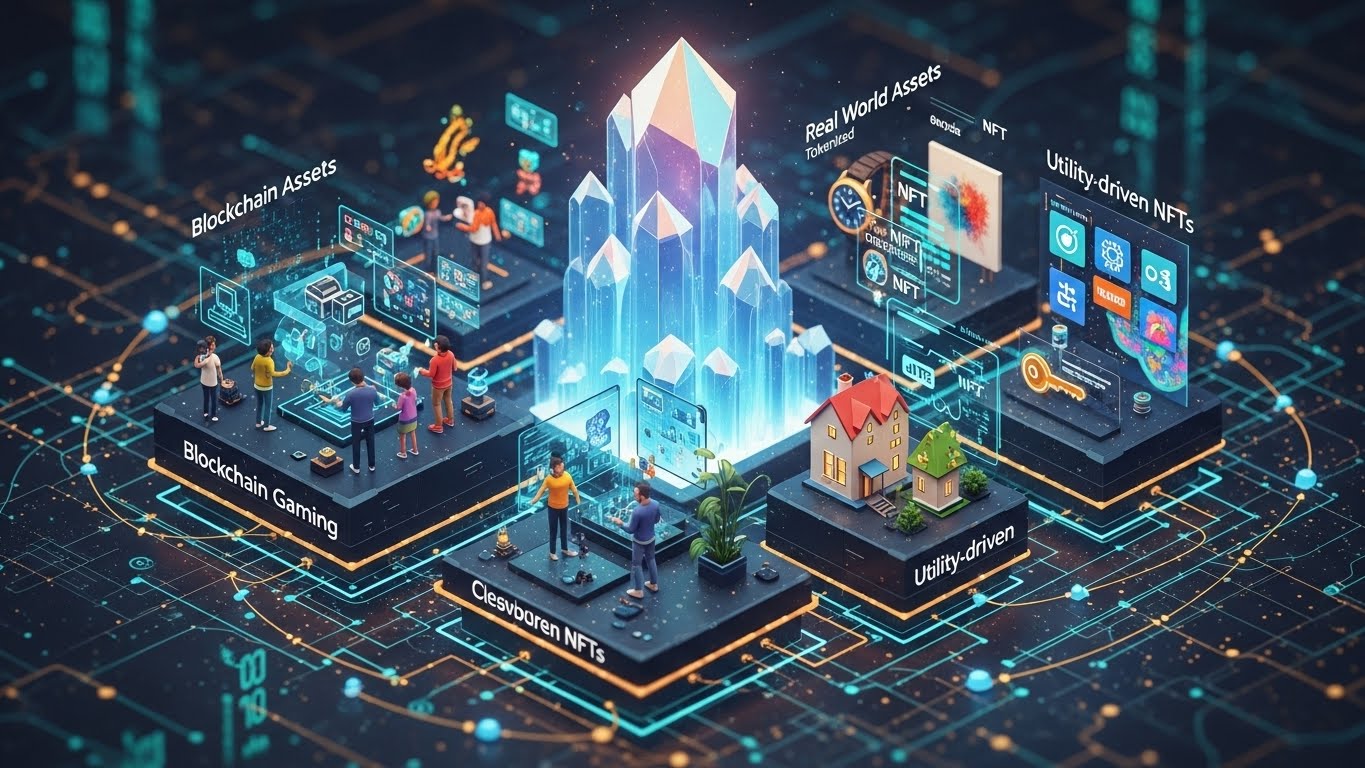
The NFT market in 2025 looks fundamentally different from its early years. What once revolved around speculative digital art, hype-driven launches, and volatile pricing has now evolved into a more structured and purpose-driven ecosystem. This maturation has not diminished interest in NFTs but has reshaped how they are created, valued, and used. Today, the NFT market is increasingly defined by real utility, immersive gaming experiences, and the tokenization of real-world assets, commonly referred to as RWA.
As the broader crypto industry stabilizes, NFTs have found renewed relevance by aligning with practical applications rather than fleeting trends. Investors, developers, and institutions are approaching NFTs with a long-term mindset, focusing on sustainability, interoperability, and measurable value. In 2025, NFT utility, blockchain gaming, and real-world asset tokenization have emerged as the primary drivers of growth, signaling that the market has entered a new and more resilient phase.
From Speculation to Functionality in the NFT Market
The early NFT boom was fueled largely by speculation, but that phase laid the groundwork for the market’s current maturity.
Lessons Learned From the NFT Boom and Bust
The explosive growth of NFTs in earlier cycles attracted mainstream attention but also exposed weaknesses. Overvaluation, lack of use cases, and oversupply led to sharp corrections. These challenges forced builders and collectors to reassess what gives an NFT lasting value.
By 2025, the market has internalized these lessons. Projects are no longer judged solely on aesthetics or celebrity endorsements but on tangible benefits and long-term relevance. This shift has strengthened trust and improved overall market quality.
Redefining Value Beyond Digital Art
While digital art remains an important cultural pillar, NFTs are now understood as programmable digital assets. Ownership can unlock access, rights, rewards, or functionality across platforms. This broader understanding has expanded the NFT market into new industries and use cases, supporting sustainable growth.
Utility NFTs Become the Market Foundation
Utility-driven NFTs represent one of the strongest pillars of the maturing market.
Access, Membership, and Identity
Utility NFTs function as digital keys, granting holders access to exclusive communities, content, and services. Membership-based NFTs are increasingly used by brands, creators, and organizations to manage digital identity and engagement. In 2025, NFTs tied to access and identity are valued for their ongoing benefits rather than resale potential. This shift aligns NFT ownership with long-term participation instead of short-term profit.
Integration With Decentralized Applications
Utility NFTs are deeply integrated into decentralized applications, enabling features such as governance participation, staking benefits, and cross-platform privileges. These integrations enhance user experience and encourage ecosystem loyalty. As NFTs become functional components within broader systems, their relevance extends beyond collectibles into everyday digital interactions.
Gaming Emerges as a Major NFT Growth Engine
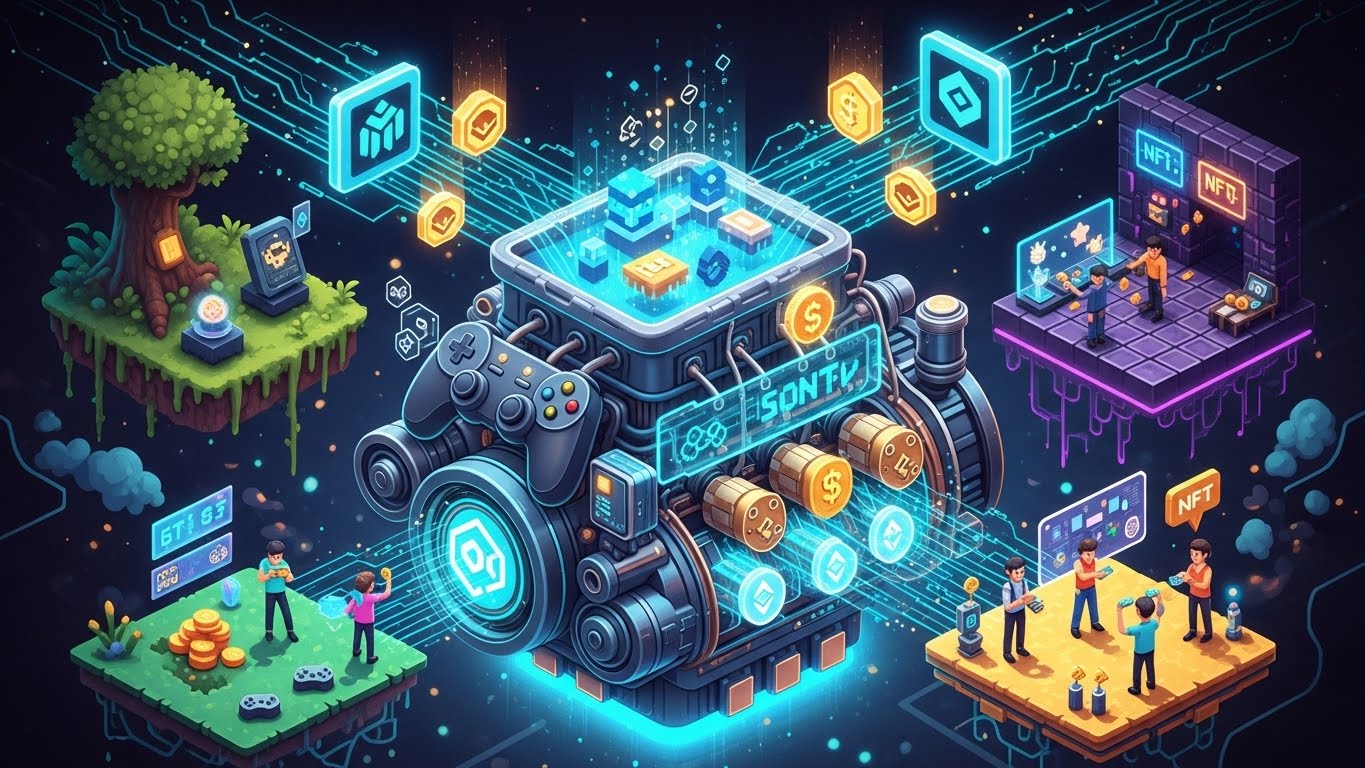
Blockchain gaming has become one of the most influential forces shaping the NFT market in 2025.
Ownership and Interoperability in Gaming
NFTs enable true ownership of in-game assets, allowing players to trade, upgrade, or transfer items freely. This ownership model contrasts with traditional gaming, where assets remain locked within centralized platforms. In 2025, interoperability is gaining traction, allowing NFTs to be used across multiple games or ecosystems. This flexibility enhances asset value and strengthens player engagement.
Play-to-Own Replaces Play-to-Earn
The earlier play-to-earn model faced sustainability issues due to inflationary token economics. In response, the industry has evolved toward a play-to-own approach. NFTs now represent meaningful digital property rather than income-generating tools. This evolution has attracted mainstream gamers who value immersive experiences and long-term ownership over short-term rewards, contributing to the NFT market’s maturity.
Real-World Assets Transform NFT Perception
One of the most significant developments in 2025 is the rise of NFTs linked to real-world assets.
Tokenizing Physical and Financial Assets
Real-world asset NFTs represent ownership or rights tied to physical goods, real estate, commodities, or financial instruments. These NFTs bridge the gap between digital and traditional markets, expanding the NFT use case beyond virtual environments. By providing transparent ownership records and programmable features, RWA NFTs improve efficiency and accessibility in asset management.
Institutional Interest and Trust
Institutions are increasingly exploring RWA NFTs as tools for modernization. The association with tangible assets enhances credibility and reduces skepticism around NFTs. This institutional interest signals a shift toward mainstream acceptance, positioning NFTs as legitimate components of the global financial system.
Infrastructure Improvements Support Market Maturity
Technological advancements have played a crucial role in stabilizing the NFT market.
Scalability and Lower Transaction Costs
High fees and network congestion once hindered NFT adoption. By 2025, improved blockchain infrastructure and Layer 2 solutions have significantly reduced transaction costs and increased scalability. These improvements make NFTs accessible to a wider audience, supporting consistent growth and usage.
Enhanced Security and Standards
Security standards for NFTs have matured, with better auditing, standardized contracts, and improved wallet protections. These advancements reduce risks for users and increase confidence in NFT ecosystems. As infrastructure becomes more reliable, long-term participation becomes more attractive.
Brand and Creator Strategies Evolve With NFTs
Brands and creators now approach NFTs with clearer objectives and refined strategies.
Long-Term Community Building
NFTs are increasingly used as tools for building lasting communities rather than one-time sales. Creators focus on delivering ongoing value through events, updates, and exclusive experiences. This approach fosters loyalty and aligns creator incentives with holder satisfaction.
Intellectual Property and Royalties
NFTs provide new ways to manage digital ownership rights and royalties. Smart contracts ensure creators receive compensation from secondary sales, promoting sustainable creative economies. In 2025, these mechanisms are more widely understood and accepted, strengthening the relationship between creators and audiences.
Regulatory Clarity Shapes the NFT Landscape
Clearer regulatory frameworks are contributing to market stability.
Defining NFTs Within Legal Systems
Governments and regulators have begun defining how NFTs fit within existing legal structures. This clarity reduces uncertainty for businesses and investors. While regulations vary by jurisdiction, increased transparency supports responsible growth and institutional participation.
Consumer Protection and Compliance
Regulatory focus on consumer protection has improved market practices. Disclosure standards and compliance requirements enhance trust without stifling innovation. Balanced regulation plays a key role in the NFT market’s transition from experimentation to maturity.
Cultural and Social Impact of NFTs in 2025
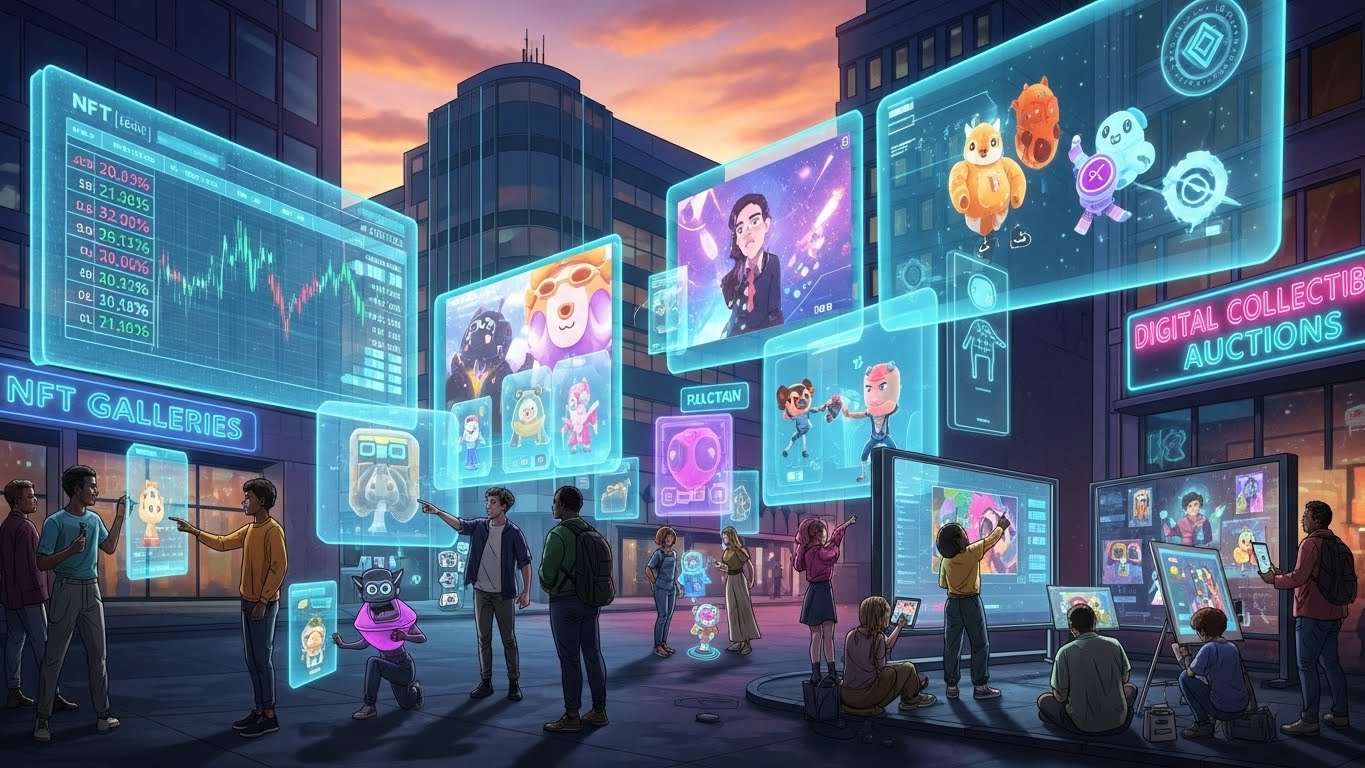
NFTs are influencing culture in ways that extend beyond technology.
Digital Identity and Self-Expression
NFTs serve as tools for digital identity, allowing individuals to express affiliation, status, and creativity. This social dimension reinforces NFTs as cultural artifacts rather than mere assets. In 2025, digital identity through NFTs is increasingly normalized across social and professional platforms.
Bridging Digital and Physical Worlds
NFTs are connecting online experiences with physical events, products, and communities. This convergence enhances engagement and broadens the appeal of NFTs beyond crypto-native audiences.
Challenges That Still Shape the NFT Market
Despite progress, challenges remain that will influence future development.
Market Saturation and Quality Control
As NFT creation becomes more accessible, oversupply remains a concern. Market participants increasingly prioritize quality, utility, and authenticity to navigate saturation. Curation and reputation play growing roles in determining project success.
Education and User Experience
Mainstream adoption requires ongoing education and intuitive interfaces. Simplifying onboarding and improving user experience remain essential for sustained growth. Addressing these challenges will define the next stage of NFT evolution.
Conclusion
The NFT market’s maturation in 2025 marks a turning point from speculation to substance. Driven by utility-focused applications, immersive blockchain gaming, and the integration of real-world assets, NFTs have established themselves as versatile digital tools with lasting value. Improved infrastructure, clearer regulations, and evolving creator strategies have further strengthened the ecosystem.
Rather than fading after early hype cycles, NFTs have adapted and matured, finding relevance across industries and cultures. As utility, gaming, and RWA continue to drive growth, the NFT market stands positioned as a durable and innovative component of the digital economy.
Q: Why is the NFT market considered more mature in 2025?
The NFT market is considered mature because it has shifted away from hype-driven speculation toward practical use cases. Utility NFTs, gaming assets, and real-world asset tokenization now provide measurable value, supporting long-term sustainability.
Q: How do utility NFTs differ from early NFT collectibles?
Utility NFTs offer functional benefits such as access, membership, governance rights, or in-app features. Early collectibles focused primarily on ownership and resale value, while utility NFTs emphasize ongoing participation and usefulness.
Q: What role does gaming play in NFT market growth?
Blockchain gaming drives NFT adoption by enabling true ownership of in-game assets and immersive experiences. The transition to play-to-own models has attracted a broader audience and strengthened the NFT ecosystem.
Q: Why are real-world assets important for NFTs?
Real-world asset NFTs connect digital ownership with tangible value, improving credibility and expanding use cases. They attract institutional interest and bridge traditional finance with blockchain technology.
Q: What challenges could still impact the NFT market after 2025?
Challenges include market saturation, maintaining quality standards, regulatory differences, and the need for better user education. Addressing these issues will shape the future trajectory of NFTs.