
US access to Venezuelan oil could eventually lower Bitcoin mining costs, according to insights shared by Bitfinex, highlighting a rare intersection between geopolitics, energy markets, and the cryptocurrency industry. As Bitcoin mining remains one of the most energy-intensive activities in the digital economy, even small shifts in global oil supply and pricing can have far-reaching implications for miners, network security, and long-term profitability. This development brings renewed attention to how traditional energy resources continue to influence decentralized technologies.
The potential easing of restrictions on Venezuelan oil exports to the United States could increase global oil supply, stabilize fuel prices, and indirectly reduce electricity generation costs. Since energy expenses make up a substantial portion of Bitcoin mining operations, lower energy prices can significantly improve margins for miners. This is especially relevant as miners face increasing competition, higher hash rates, and pressure to remain profitable after Bitcoin halving events.
US access to Venezuelan oil matters, how it could impact energy markets, and why Bitfinex believes it could eventually lower Bitcoin mining costs. By examining geopolitical factors, energy economics, and mining infrastructure, we uncover the broader implications for the crypto ecosystem.
Understanding the Energy-Intensive Nature of Bitcoin Mining
Bitcoin mining relies on proof-of-work, a consensus mechanism that requires vast computational power to secure the network and validate transactions. This process consumes large amounts of electricity, making energy costs the single most important expense for miners. Any reduction in power costs can therefore have a meaningful impact on mining profitability.
Mining operations often cluster in regions where electricity is cheap and abundant. These locations typically depend on a mix of energy sources, including fossil fuels, hydropower, and increasingly renewable energy. However, fossil fuels still play a major role in global electricity production, particularly in regions where mining infrastructure is most developed. As Bitcoin mining energy costs continue to influence operational decisions, changes in oil supply and pricing remain a critical factor, even for miners who do not directly use oil-fired power plants.
The Role of Oil in Global Energy Markets
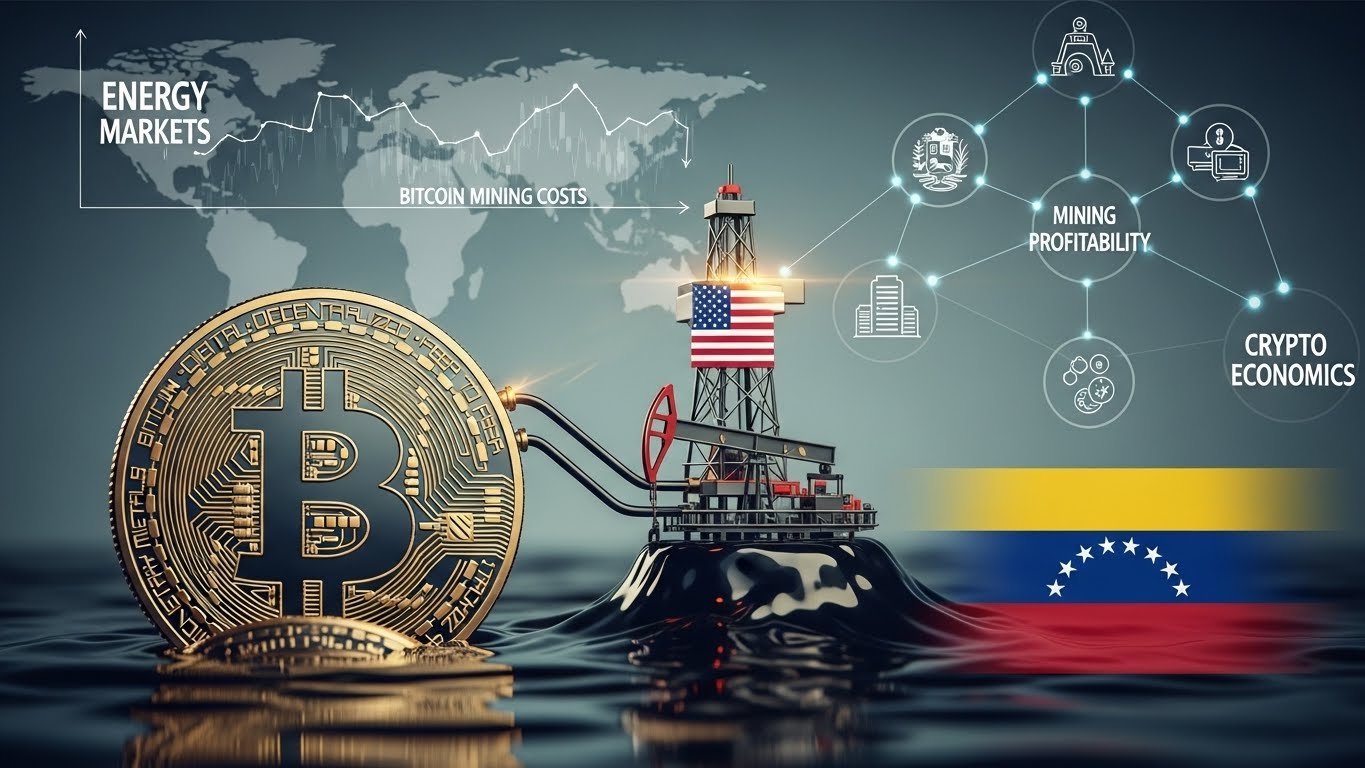
Oil remains a cornerstone of the global energy system, influencing not only transportation fuels but also electricity generation costs and industrial energy pricing. When oil supply increases, it can exert downward pressure on energy prices across multiple sectors.
Venezuela holds some of the world’s largest proven oil reserves, yet years of sanctions and underinvestment have limited its production and export capacity. If US access to Venezuelan oil expands, global supply could increase, potentially stabilizing or lowering oil prices over time.
Lower oil prices often translate into reduced costs for electricity generation, particularly in regions where oil or gas-linked pricing mechanisms are in place. This connection explains why developments in oil markets can ripple into industries like Bitcoin mining.
US Access to Venezuelan Oil and Geopolitical Shifts
The possibility of renewed US access to Venezuelan oil reflects shifting geopolitical priorities. Energy security concerns, inflation pressures, and global supply disruptions have prompted policymakers to reconsider restrictions on energy-rich nations. If Venezuelan oil re-enters US and global markets at scale, it could alter supply-demand dynamics. Increased availability would likely reduce price volatility and ease pressure on energy-importing countries. For the crypto sector, these geopolitical changes may seem distant, but their effects on energy pricing are highly relevant. As Bitfinex suggests, such developments could eventually lower Bitcoin mining costs by reshaping the broader energy landscape.
Bitfinex Perspective on Mining Economics
Bitfinex’s analysis emphasizes the long-term nature of this potential impact. While immediate effects may be limited, sustained access to additional oil supply could gradually influence energy markets and mining economics.
Mining profitability depends on a delicate balance between Bitcoin price, network difficulty, and operational costs. Energy represents the most variable of these factors. Even modest reductions in electricity prices can make the difference between profitable and unprofitable operations. From a crypto mining economics standpoint, Bitfinex highlights that macro-level energy trends often take time to filter down to miners, but their cumulative impact can be substantial.
How Lower Energy Costs Affect Bitcoin Miners
Lower energy costs directly improve miner margins by reducing the cost per hash. This allows miners to operate more efficiently, invest in better hardware, and remain competitive as network difficulty increases.
Reduced costs also enable miners to weather periods of lower Bitcoin prices without shutting down operations. This stability contributes to overall network security, as a diverse and resilient mining base reduces centralization risks. In regions where energy pricing is closely tied to global oil markets, increased Venezuelan oil supply could provide meaningful relief. Over time, this may encourage expansion or relocation of mining operations to areas benefiting most from lower prices.
Impact on Mining Centralization and Competition
Energy costs play a major role in determining where Bitcoin mining is economically viable. High costs tend to concentrate mining in a few regions with access to cheap power, while lower costs can promote geographic diversification. If oil-driven energy prices decline more broadly, mining could become viable in additional regions. This would enhance decentralization and reduce dependence on a small number of energy hubs. From a Bitcoin network security perspective, greater decentralization strengthens resistance to censorship and systemic risks, reinforcing the network’s long-term resilience.
Relationship Between Oil Prices and Electricity Costs
While many miners rely on renewable or hydroelectric power, electricity pricing is often influenced by broader energy markets. Oil prices can affect natural gas prices, grid operating costs, and infrastructure investment decisions.
In regions where power generation relies on oil or gas, cheaper fuel leads to lower wholesale electricity prices. Even in renewable-heavy grids, lower fossil fuel costs can reduce backup power expenses and stabilize pricing. This interconnected system explains why developments like US access to Venezuelan oil can have indirect but meaningful effects on Bitcoin mining electricity costs.
Environmental Considerations and Energy Transition
Lower oil prices raise important questions about environmental sustainability. Critics argue that cheaper fossil fuels could slow the transition to renewable energy. However, the reality is more complex. Many Bitcoin miners are already integrating renewable energy sources to reduce costs and improve sustainability. Lower overall energy prices could free up capital for investment in cleaner infrastructure rather than discouraging it. Additionally, improved profitability may allow miners to experiment with waste energy capture and grid-balancing solutions, supporting a more sustainable mining ecosystem despite fluctuations in oil markets.
Mining Hardware Efficiency and Cost Dynamics
Energy costs are only one part of the mining equation. Hardware efficiency, measured in hashes per watt, continues to improve with technological innovation. Lower electricity prices amplify the benefits of efficient hardware, making upgrades more attractive. When energy is cheaper, miners can justify investing in next-generation equipment that further reduces operational costs. This cycle of efficiency and affordability contributes to network growth and competitiveness. Bitfinex’s perspective underscores that energy market shifts, combined with hardware advances, can reshape the economics of mining over the long term.
Broader Implications for the Crypto Market
Reduced Bitcoin mining costs can influence the broader crypto market in several ways. Lower operating expenses may reduce selling pressure from miners, as they need to liquidate fewer coins to cover costs. This dynamic can support price stability during periods of market uncertainty. Additionally, improved miner profitability often correlates with increased confidence in the network’s long-term viability. As Bitcoin mining profitability improves, investor sentiment toward mining companies and related infrastructure may also strengthen.
Risks and Uncertainties in the Outlook

While the potential benefits are significant, several uncertainties remain. Political developments, infrastructure limitations, and global market responses could all affect the extent to which Venezuelan oil impacts prices.
Sanctions policy, production capacity, and investment requirements will determine how quickly and effectively Venezuelan oil can reach global markets. Moreover, energy markets are influenced by numerous variables beyond oil supply alone. Bitfinex’s view emphasizes that while the direction is promising, outcomes are not guaranteed and will unfold over time.
Long-Term Outlook for Bitcoin Mining Costs
Looking ahead, the long-term outlook for Bitcoin mining costs depends on a combination of energy trends, technological progress, and regulatory environments. Increased oil supply could be one piece of a larger puzzle that shapes mining economics. As the industry matures, miners are likely to diversify energy sources, optimize operations, and adapt to changing market conditions. Lower energy costs provide flexibility and resilience during this evolution. The possibility that US access to Venezuelan oil could eventually lower Bitcoin mining costs illustrates how interconnected global systems have become, linking geopolitics and decentralized finance in unexpected ways.
Conclusion
US access to Venezuelan oil could eventually lower Bitcoin mining costs, as Bitfinex suggests, by influencing global energy supply and pricing dynamics. While the impact may not be immediate, sustained changes in oil markets can reduce electricity costs, improve miner profitability, and strengthen the Bitcoin network over time.
This development highlights the ongoing relationship between traditional energy resources and digital innovation. Bitcoin mining, despite its decentralized nature, remains deeply connected to global economic and geopolitical forces. As energy markets evolve, miners who adapt strategically stand to benefit from improved efficiency, stability, and long-term sustainability. Understanding these connections is essential for anyone seeking to grasp the future of Bitcoin mining and its role within the broader financial ecosystem.
FAQs
Q: How could US access to Venezuelan oil lower Bitcoin mining costs?
US access to Venezuelan oil could increase global oil supply, potentially lowering oil and energy prices. Since electricity costs are a major expense for Bitcoin miners, lower energy prices could reduce operational costs and improve mining profitability over time.
Q: Why do energy prices matter so much for Bitcoin mining?
Bitcoin mining relies on energy-intensive computational processes. Electricity costs make up a large portion of mining expenses, so changes in energy pricing directly affect whether mining operations are profitable or not.
Q: Does Bitcoin mining depend directly on oil-based energy?
Not all Bitcoin mining depends directly on oil-based energy, as many operations use hydroelectric or renewable sources. However, global electricity prices are influenced by oil and gas markets, making oil supply relevant to mining economics.
Q: Could lower mining costs affect Bitcoin’s price?
Lower mining costs may reduce the need for miners to sell Bitcoin to cover expenses, potentially easing selling pressure. While this does not guarantee price increases, it can contribute to greater market stability.
Q: Is the impact of Venezuelan oil on Bitcoin mining immediate?
The impact is unlikely to be immediate. Changes in oil supply take time to influence global markets, energy pricing, and electricity costs. Bitfinex emphasizes that any benefits for Bitcoin mining would likely emerge gradually rather than instantly.