
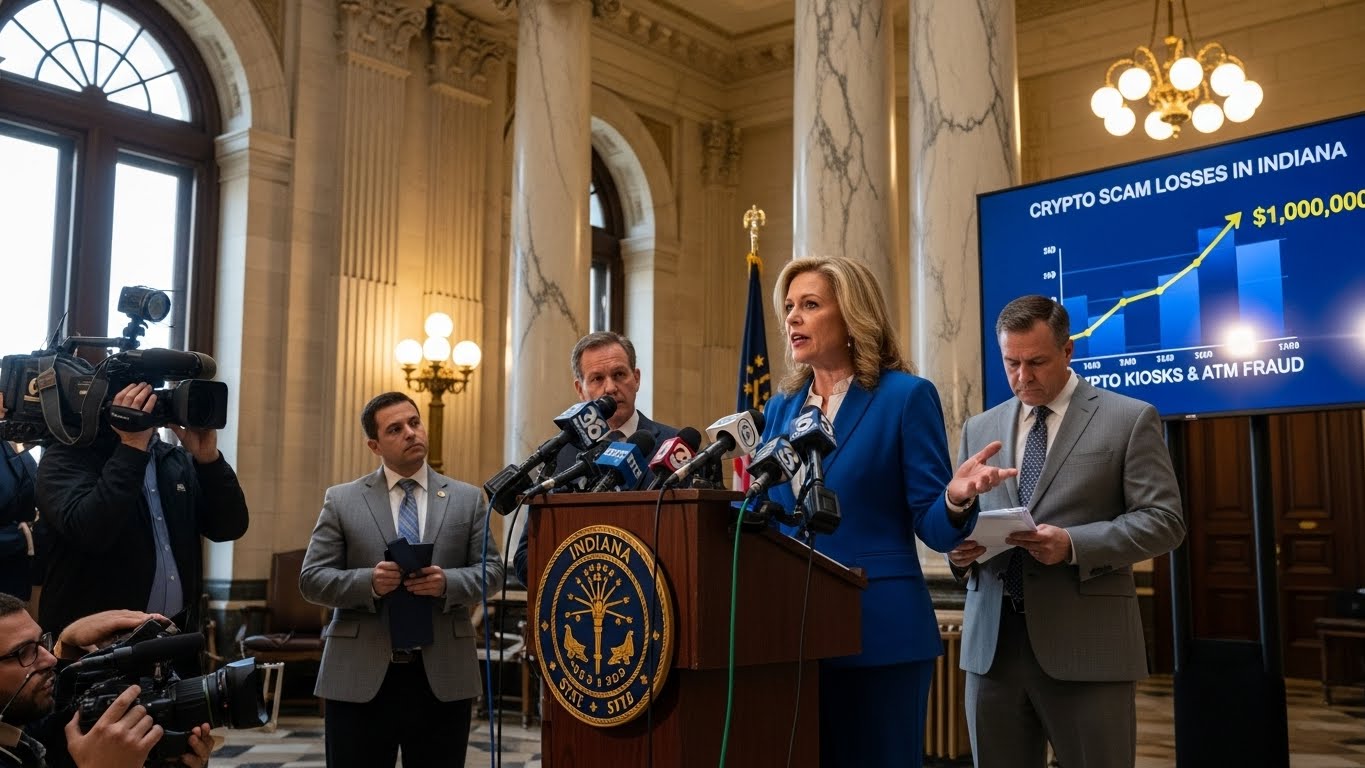
Cryptocurrency was once promoted as a tool of financial freedom, innovation, and digital empowerment. Yet for many Hoosiers, it has become associated with deception, financial loss, and emotional distress. As reports confirm that Indiana residents have lost more than a million dollars to cryptocurrency scams, particularly through crypto kiosks and ATMs, state lawmakers are stepping in to address a growing crisis. What initially appeared to be isolated incidents has now revealed a pattern of exploitation that demands legislative attention.
Crypto kiosks, often placed in gas stations, convenience stores, and retail locations, were designed to make digital assets more accessible. Instead, they have increasingly become the preferred tool of scammers who exploit confusion, fear, and lack of regulation. Victims are often pressured into making irreversible transactions under false pretenses, believing they are protecting their money or complying with authorities. Once the funds are transferred, recovery is nearly impossible.
The Indiana Legislature’s move to tackle this issue reflects a broader national concern about crypto fraud, consumer protection, and the responsibilities of both government and private operators. This article explores how these scams operate, why Hoosiers are disproportionately affected, what lawmakers are proposing, and how these actions could reshape the future of cryptocurrency use and regulation in Indiana and beyond.
Understanding Cryptocurrency Kiosk Scams
What Are Crypto Kiosks and How They Work
Crypto kiosks, commonly referred to as cryptocurrency ATMs, allow users to buy or sell digital currencies using cash or debit cards. Unlike traditional bank ATMs, these machines often operate outside standard banking regulations and offer limited consumer safeguards. Transactions are typically fast, irreversible, and require minimal identity verification.
For legitimate users, kiosks offer convenience. For scammers, they provide anonymity, speed, and finality. These characteristics make kiosks an ideal tool for crypto scam operations, especially when targeting individuals unfamiliar with blockchain technology.
Why Scammers Prefer Crypto Kiosks
Scammers exploit the irreversible nature of cryptocurrency transactions. Once funds are sent to a scammer-controlled wallet, they cannot be recalled. Fraudsters often guide victims step by step, instructing them on how to use a kiosk while maintaining psychological pressure. The physical presence of a kiosk adds a false sense of legitimacy. Victims assume that if a machine is publicly accessible, it must be safe. This misconception plays a crucial role in the success of these scams.
How Hoosiers Are Being Targeted

Common Scam Tactics Used in Indiana
Victims across Indiana report similar patterns. Scammers pose as government officials, law enforcement officers, utility companies, or even family members in distress. They claim urgent action is required to avoid arrest, service disconnection, or financial loss. Once fear is established, the victim is instructed to withdraw cash and deposit it into a crypto kiosk. The scammer often stays on the phone, preventing the victim from seeking advice or reconsidering the transaction. These tactics are a hallmark of cryptocurrency fraud schemes.
Emotional and Financial Impact on Victims
The financial losses are significant, but the emotional toll is equally devastating. Many victims are older adults, retirees, or individuals with limited digital literacy. Losing life savings to a scam can lead to shame, anxiety, and long-term financial instability. These personal stories have played a powerful role in prompting legislative action, as lawmakers hear directly from constituents affected by kiosk-related scams.
The Scale of the Problem in Indiana
Losses Exceeding One Million Dollars
Reports indicate that Hoosiers have lost over a million dollars through crypto kiosk scams, and experts believe this figure may be conservative. Many victims do not report losses due to embarrassment or lack of awareness about where to seek help. The rapid increase in losses has raised alarms among consumer protection agencies and legislators alike. The data suggests that crypto kiosk fraud is not a fringe issue but a systemic problem requiring immediate attention.
Why Indiana Became a Target
Indiana’s mix of urban and rural communities, combined with growing kiosk availability, has created fertile ground for scammers. In some areas, kiosks appeared faster than public education efforts, leaving residents vulnerable. Additionally, limited oversight and inconsistent signage contributed to confusion, allowing scams to flourish largely unchecked.
Legislative Response and Proposed Measures
Why the Legislature Is Taking Action Now
The surge in reported losses forced the issue into the legislative spotlight. Lawmakers recognized that existing consumer protection laws were not designed to address the unique risks posed by cryptocurrency transactions. Public hearings, testimony from victims, and collaboration with law enforcement have shaped the current push to regulate crypto kiosks more effectively. The goal is not to ban cryptocurrency but to prevent abuse.
Key Focus Areas of Proposed Legislation
Proposed measures focus on transparency, accountability, and consumer awareness. Lawmakers aim to require clearer warnings on kiosks, stronger identity verification, and transaction limits designed to prevent large losses. By targeting the infrastructure used in scams rather than the technology itself, legislators hope to curb crypto scams in Indiana without stifling innovation.
Role of Crypto Kiosk Operators
Responsibility of Private Companies
Kiosk operators play a central role in this debate. While many operate legally, critics argue that insufficient safeguards make their machines vulnerable to misuse. Lawmakers are increasingly questioning whether profit incentives have outweighed consumer protection. Proposed regulations may require operators to implement stronger monitoring systems, provide real-time fraud warnings, and cooperate more closely with authorities.
Balancing Innovation and Consumer Safety
The challenge lies in balancing access to digital assets with protection against fraud. Overregulation could limit legitimate use, while underregulation leaves consumers exposed. This tension is at the heart of the legislative discussion.
Law Enforcement and Consumer Protection Efforts
Challenges in Investigating Crypto Scams
Cryptocurrency scams are difficult to investigate due to anonymity, cross-border transactions, and the speed at which funds move. Law enforcement agencies often lack the tools or training needed to trace stolen assets effectively. This reality underscores the importance of prevention rather than recovery. Once funds are gone, victims rarely see them returned.
Education as a Long-Term Solution
In addition to regulation, education is critical. Public awareness campaigns can help residents recognize red flags and understand how cryptocurrency scams operate. Legislators increasingly view education as a complement to enforcement, not a substitute.
Broader Implications for Cryptocurrency Regulation
What This Means for the Crypto Industry
Indiana’s actions reflect a growing national trend toward regulating crypto access points rather than banning digital assets outright. The industry faces increasing pressure to demonstrate responsibility and transparency. How kiosk operators and crypto advocates respond could influence public perception and future regulatory decisions across the country.
Setting a Precedent for Other States
If Indiana’s measures prove effective, other states may adopt similar frameworks. This could lead to more consistent standards nationwide, reducing opportunities for scammers to exploit regulatory gaps. The cryptocurrency regulation landscape is evolving, and Indiana’s approach may serve as a model for balanced oversight.
Protecting Vulnerable Communities
Why Seniors Are Most at Risk
Older adults are disproportionately targeted due to limited familiarity with digital assets and a higher likelihood of responding to authority-based scams. Scammers exploit trust and urgency, making seniors particularly vulnerable. Legislative efforts often emphasize protecting these populations through clearer warnings and transaction delays that allow time for reconsideration.
Community Involvement and Support Networks
Community organizations, financial institutions, and families all play a role in prevention. Encouraging open conversations about scams can reduce stigma and empower individuals to seek help before it is too late.
The Future of Crypto Kiosks in Indiana
Will Regulation Reduce Scams?
Regulation alone cannot eliminate fraud, but it can significantly reduce risk. Clear rules, accountability, and public awareness create barriers that make scams harder to execute. The success of Indiana’s approach will depend on enforcement, cooperation from operators, and ongoing evaluation of emerging threats.
Rebuilding Trust in Digital Finance
Ultimately, the goal is to rebuild trust. Cryptocurrency and blockchain technology offer real benefits, but those benefits are undermined when scams dominate public perception. Thoughtful regulation can help restore confidence while preserving innovation.
Conclusion
The Indiana Legislature’s decision to tackle cryptocurrency scams reflects a growing recognition that innovation without protection leaves consumers vulnerable. As Hoosiers lose over a million dollars to crypto kiosk scams, lawmakers are stepping in to address gaps in oversight, education, and accountability. This response is not an attack on cryptocurrency itself but a necessary effort to protect residents from exploitation.
By focusing on transparency, consumer safeguards, and responsible operation of crypto kiosks, Indiana aims to strike a balance between technological progress and public safety. The outcome of these efforts will shape not only the future of crypto use in the state but also influence broader conversations about digital finance regulation across the country.
FAQs
Q: Why are cryptocurrency kiosks commonly used in scams targeting Hoosiers?
Cryptocurrency kiosks are often used in scams because they allow fast, irreversible transactions with minimal oversight. Scammers exploit the lack of consumer familiarity and the perception that public machines are safe, guiding victims through transactions that cannot be reversed once completed.
Q: How much money have Indiana residents lost to crypto kiosk scams?
Indiana residents have reportedly lost over a million dollars to cryptocurrency kiosk scams. Experts believe the actual amount may be higher due to underreporting, as many victims feel embarrassed or unsure about where to report their losses.
Q: What actions is the Indiana Legislature taking to address crypto scams?
The Indiana Legislature is proposing measures such as clearer warning signage on kiosks, stronger identity verification, transaction limits, and increased accountability for kiosk operators. These steps aim to prevent fraud without banning cryptocurrency use.
Q: Who is most at risk of falling victim to cryptocurrency scams in Indiana?
Older adults and individuals with limited digital literacy are most at risk. Scammers often target seniors using fear-based tactics and impersonation schemes, making them more likely to comply with fraudulent instructions.
Q: Can victims recover money lost through cryptocurrency kiosk scams?
In most cases, recovering lost funds is extremely difficult due to the irreversible nature of cryptocurrency transactions. This is why prevention, education, and regulation are considered the most effective tools for reducing future losses.