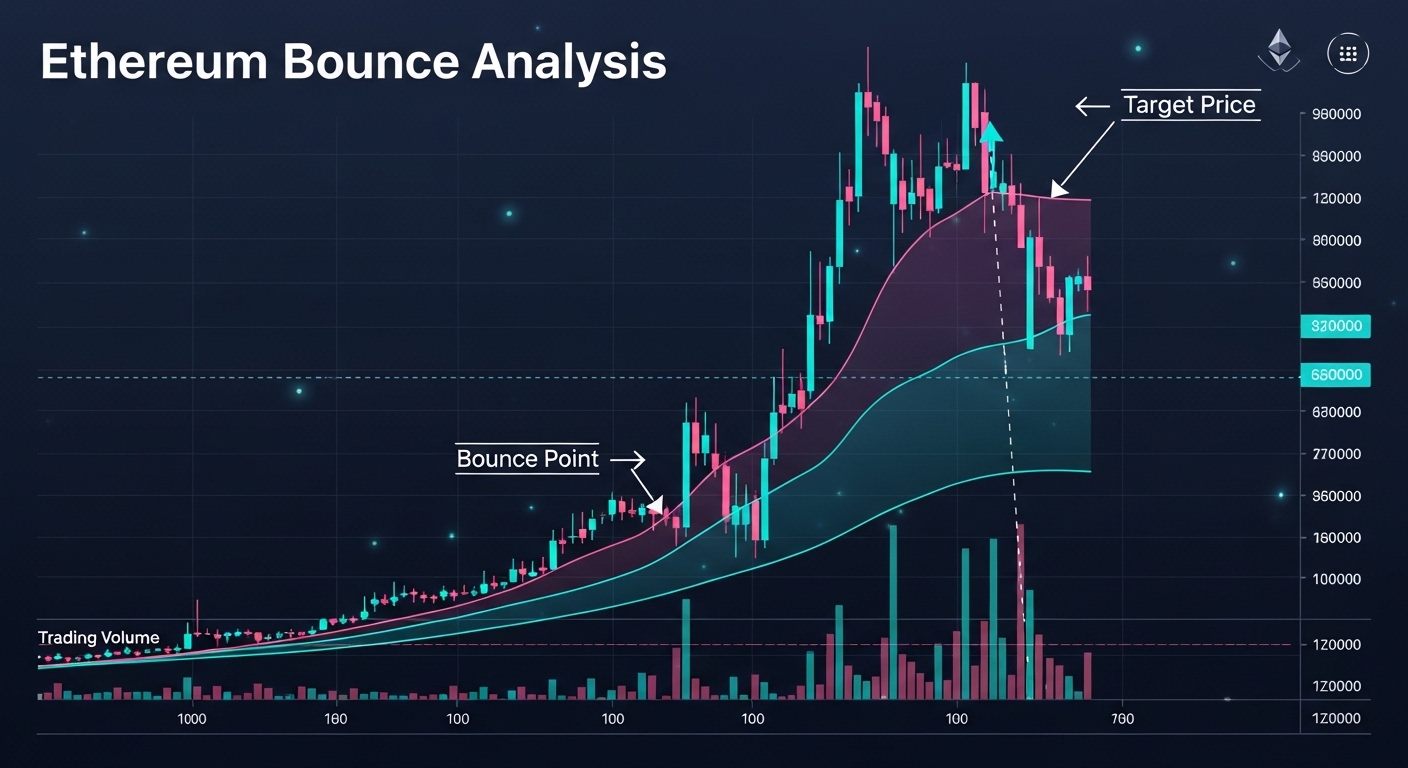
If you’ve been watching ETH lately, the price action may look like a familiar script: a sharp dip, a relief rally, and then a slow grind that struggles to attract fresh demand. What’s changing now is the quality of the bounce. In this Ethereum bounce analysis, the rebound doesn’t look like a confident trend reversal; it looks like a market catching its breath while sellers quietly reorganize. That “tired” feeling often shows up when buying pressure lacks urgency, volume fades on green candles, and every push upward meets steady distribution from traders who just want out on better terms.
This Ethereum bounce analysis isn’t about predicting an exact top or bottom. It’s about reading the signals that tell you whether the bounce is powered by real accumulation or simply by short covering and bargain hunting. When rebounds are strong, buyers defend pullbacks quickly, reclaim key levels with conviction, and keep momentum indicators trending upward. When rebounds are weak, the market becomes reactive: price rises but doesn’t build structure, and it starts to drift into zones where sellers can reassert control with less effort.
Why this rebound feels different
A tired bounce also tends to appear when participants are split into two camps. Bulls see “discount ETH” and assume a recovery is inevitable. Bears see “liquidity above” and assume the next leg down is just waiting for the right trigger. The truth is usually in the middle: ETH can bounce and still remain vulnerable, especially if sellers are using the rebound to unload risk. That’s why this Ethereum bounce analysis focuses on what sellers typically do next, how to identify their footprints, and which levels matter most if the rebound begins to crack.
The market psychology behind a tired bounce
A key theme in this Ethereum bounce analysis is that bounces are not all equal. Some bounces are “fresh trend” bounces, where new money steps in and builds higher lows. Others are “exit ramp” bounces, where trapped holders and short-term traders sell into strength. A tired bounce usually leans toward the second category, and it tends to come with predictable behavior: rallies slow down near prior breakdown zones, intraday reversals become more frequent, and buyers hesitate because the memory of the last dump is still fresh.
In practical terms, fatigue shows up when ETH pushes higher but can’t keep closing strong on the daily timeframe. You’ll often see upper wicks, tight ranges, and choppy consolidation instead of clean continuation. In this Ethereum bounce analysis, that choppiness matters because it creates a convenient environment for sellers: they can distribute gradually without triggering panic, while buyers keep hoping the “real breakout” is one candle away.
Key price structure: where sellers usually prepare the next move
The most important part of any Ethereum bounce analysis is structure—how price behaves around previous support and resistance zones. ETH doesn’t move randomly; it moves around levels where participants are positioned and emotionally invested.
Previous support becomes resistance
When ETH breaks below an important support zone, that level often becomes resistance on the way back up. In this Ethereum bounce analysis, that area is where sellers tend to reload. Why? Because traders who bought support and got trapped now want to exit near breakeven, and short sellers see a clean spot to defend. If ETH keeps tapping the same ceiling and failing to reclaim it decisively, it’s a sign that supply is still heavy.
Lower highs are a seller’s best friend
A tired bounce often creates a sequence of lower highs on the daily chart. That pattern signals that each rebound is weaker than the last, which is exactly what sellers want. In this Ethereum bounce analysis, lower highs matter because they compress price into a wedge-like structure where a breakdown can happen quickly once bids thin out. A single catalyst—macro volatility, sudden risk-off sentiment, or a big liquidation cascade—can turn “sideways” into “down” in a hurry.
Liquidity zones and stop clusters
Markets love to hunt liquidity. In this Ethereum bounce analysis, expect sellers to target obvious areas where stops sit, such as recent swing lows. If ETH fails to break higher and starts sliding, it can quickly move toward those liquidity pools, triggering stop-losses and pushing price down faster than most traders expect. That’s not magic; it’s positioning mechanics.
Technical indicators that hint the bounce is running out of fuel
Indicators aren’t prophecy, but they help confirm whether the story told by price structure is believable. This Ethereum bounce analysis uses indicators as “supporting evidence,” not as the entire argument.
RSI: momentum without follow-through
If RSI rebounds from oversold but struggles to push into stronger bullish territory, it can suggest a weak recovery. In this Ethereum bounce analysis, watch whether RSI makes lower highs while price tries to move up. That divergence often signals that momentum is fading beneath the surface even if candles still look “okay.”
MACD: the lagging confirmation
MACD is slower, but it can reveal whether the rebound has enough trend energy to sustain. In this Ethereum bounce analysis, a weak MACD crossover or a quick flattening after a bounce indicates that buyers are not accelerating. If MACD can’t expand, the bounce is often more fragile than it appears.
Moving averages: reclaiming is harder than touching
Traders often treat moving averages like magnets. ETH may “touch” a key average and still fail the reclaim. In this Ethereum bounce analysis, the difference between a brief tag and a strong close above matters. A tired bounce frequently stalls at commonly watched averages (like short- and mid-term trend lines), then rolls over when buyers can’t defend the level on retests.
Volume and order flow: the truth behind the candles
Volume is where many “looks bullish” bounces get exposed. In this Ethereum bounce analysis, the healthiest rebounds usually show rising volume on up days and controlled volume on pullbacks. Fatigued rebounds often show the opposite: muted volume during rallies and heavier volume on red candles.
A common seller tactic is distributing into strength. That means they don’t dump all at once; they sell incrementally as price pushes higher, letting buyers do the work of lifting price into their sell orders. In this Ethereum bounce analysis, repeated rallies with shrinking volume can be a warning that the bounce is being “fed” by weaker demand. If volume spikes on a downside break, it confirms that sellers were waiting for a trigger.
Derivatives signals: funding, open interest, and liquidation risk
ETH’s spot market matters, but derivatives often explain why moves accelerate. In this Ethereum bounce analysis, derivatives data can reveal whether the rebound is built on solid demand or on leverage.
Funding rates: when optimism becomes fragile
If funding rates rise quickly during a bounce, it suggests traders are piling into longs. That can support price short-term, but it also creates vulnerability. In this Ethereum bounce analysis, overheated funding can become fuel for a sharp drop if price stalls, because leveraged longs are forced to exit when momentum flips.
Open interest: crowded positioning can snap
Rising open interest during a sluggish rebound can indicate that traders are adding positions without a decisive trend. In this Ethereum bounce analysis, that’s a recipe for whipsaw. If ETH breaks down, liquidations can cascade, pushing price lower faster than spot sellers alone could manage.
The “slow bleed” scenario
Not every bearish move is dramatic. In this Ethereum bounce analysis, one realistic outcome is a slow grind lower that frustrates both sides: bulls keep buying dips, bears don’t get a clean flush, and ETH drifts downward as liquidity thins. This is often how markets transition from a tired bounce into a more decisive selloff later.
On-chain behavior: what sellers often do before a drop
On-chain signals don’t give perfect timing, but they can hint at intent. In this Ethereum bounce analysis, pay attention to patterns that often align with distribution phases, such as rising exchange inflows (coins moving toward potential sell venues) or reduced conviction among longer-term holders.
Another element is whale behavior. Large holders tend to use liquidity-rich moments—like rebounds—to rebalance. In this Ethereum bounce analysis, the point isn’t “whales are dumping,” but rather that big players prefer to transact when the market can absorb size without slippage. A bounce that looks tired can still be “useful” to sellers who need better pricing.
Scenarios to watch next: what sellers may try to do
A good Ethereum bounce analysis doesn’t lock into one outcome. It outlines scenarios and tells you what would confirm each one.
Scenario 1: Rejection at resistance, then a break of recent lows
If ETH repeatedly fails to reclaim a major resistance band and then breaks below a short-term support, sellers often press harder. In this Ethereum bounce analysis, that sequence is one of the cleanest “next move” setups: rejection → breakdown → acceleration into liquidity zones.
Scenario 2: Range chop, then a volatility expansion
Sometimes ETH doesn’t drop immediately. It compresses into a range, lulling traders into overconfidence. In this Ethereum bounce analysis, range compression is dangerous because the breakout direction tends to surprise the crowd. If sellers control the higher end of the range and buyers lose patience, the eventual move can be sharp.
Scenario 3: Surprise continuation if buyers reclaim structure
Sellers don’t always win. In this Ethereum bounce analysis, a bullish outcome becomes more likely if ETH reclaims key resistance, holds it on retests, and starts printing higher highs and higher lows. The market doesn’t need to “feel good” to go up; it needs to prove demand with structure and follow-through.
Risk management: how to approach a tired bounce without guessing
This Ethereum bounce analysis is not financial advice, but it can help you avoid common mistakes. The biggest trap in a tired bounce is forcing a narrative: either “we’re back” or “it’s over.” Instead, focus on invalidation and structure. If you’re bullish, your thesis should break if ETH loses key support. If you’re bearish, your thesis should break if ETH reclaims and holds resistance with momentum.
Another practical approach in this Ethereum bounce analysis is to size positions based on volatility. When ETH is choppy, it can wick both directions and punish tight stops. That doesn’t mean “don’t trade”; it means treat the environment as higher risk. Whether you invest or trade, the goal is the same: don’t let a tired bounce trick you into taking full-risk decisions before the market confirms direction.
Conclusion
The core takeaway from this Ethereum bounce analysis is simple: ETH can bounce and still be in danger. A rebound that lacks volume, fails to reclaim structure, and shows fading momentum often becomes a staging ground for sellers. That doesn’t guarantee a crash, but it does mean the market is at a decision point where small shifts in sentiment can produce large moves.
If sellers are preparing the next move, they typically do it in plain sight—defending resistance, leaning into lower highs, and waiting for support to break so momentum traders and liquidations do the heavy lifting. The smartest way to use this Ethereum bounce analysis is not to predict the next candle, but to track the market’s confirmations: structure, momentum, volume, and positioning. When those align, the “tired” feel turns into a clear direction—and that’s when the next leg usually begins.
FAQs
Q: What does “Ethereum bounce looks tired” actually mean?
It means the rebound is losing strength, often shown by weak momentum, fading volume, repeated rejections at resistance, and choppy price action that doesn’t build higher highs.
Q: Which indicators matter most in an Ethereum bounce analysis?
The most useful tools are price structure (support/resistance), RSI, MACD, moving averages, and volume. Together, they help confirm whether demand is real or fading.
Q: Can ETH still go up even if the bounce looks tired?
Yes. In this Ethereum bounce analysis, a bullish continuation becomes more likely if ETH reclaims key resistance, holds it on retests, and prints stronger momentum with supportive volume.
Q: Why do sellers often wait for a bounce before selling?
Bounces provide liquidity and better pricing. Sellers can distribute into strength without causing immediate panic, especially if buyers are eager to “buy the dip.”
Q: What is the biggest risk for traders during a tired bounce?
Overconfidence. Traders often assume a rebound guarantees reversal, or they short too early without confirmation. Managing risk around clear invalidation levels is essential.