
The cryptocurrency market has once again entered a critical phase. Recent data shows that altcoin sell pressure has surged to a five-year extreme, triggering intense debate across trading communities, institutional desks, and long-term investor circles. For seasoned crypto participants, such moments are often associated with fear, capitulation, and market exhaustion. But for strategic investors, they may represent something entirely different: opportunity.
When altcoin sell pressure hits levels not seen in half a decade, it signals a powerful shift in sentiment. Retail investors may be panic selling, short-term traders could be locking in losses, and even some institutions might be reallocating capital. Yet historically, extreme sell pressure has often coincided with market bottoms rather than prolonged downturns.
The key question remains: Is this the bottom signal investors have waited for, or merely another step in a deeper correction? To answer that, we must explore the underlying causes of this surge in selling activity, examine historical precedents, analyze on-chain data, and evaluate broader macroeconomic influences shaping the crypto landscape today.
Understanding Altcoin Sell Pressure in the Current Market Cycle
Altcoin sell pressure refers to the sustained and aggressive selling activity across alternative cryptocurrencies beyond Bitcoin. When this pressure intensifies, prices decline sharply, liquidity thins out, and volatility increases. Over the past few months, market participants have observed heavy red candles across major altcoins, smaller-cap tokens, and even previously strong performers.
This wave of selling has been driven by several converging factors. First, macroeconomic uncertainty continues to impact global financial markets. Rising interest rates, tighter monetary policies, and inflation concerns have reduced risk appetite across asset classes. Cryptocurrencies, particularly altcoins, are often viewed as high-risk investments, making them vulnerable during periods of economic stress.
Second, capital rotation back into Bitcoin has intensified. Historically, during uncertain phases, traders seek relative safety in Bitcoin dominance rather than altcoins. This shift amplifies altcoin sell pressure as liquidity drains from smaller tokens and concentrates into more established assets.
Third, leveraged positions have been flushed out. The unwinding of over-leveraged trades leads to cascading liquidations, further increasing downward momentum. This combination of macro pressure, capital rotation, and forced liquidations has pushed altcoin sell pressure to levels rarely seen over the past five years.
Historical Context: What Happens When Sell Pressure Peaks?
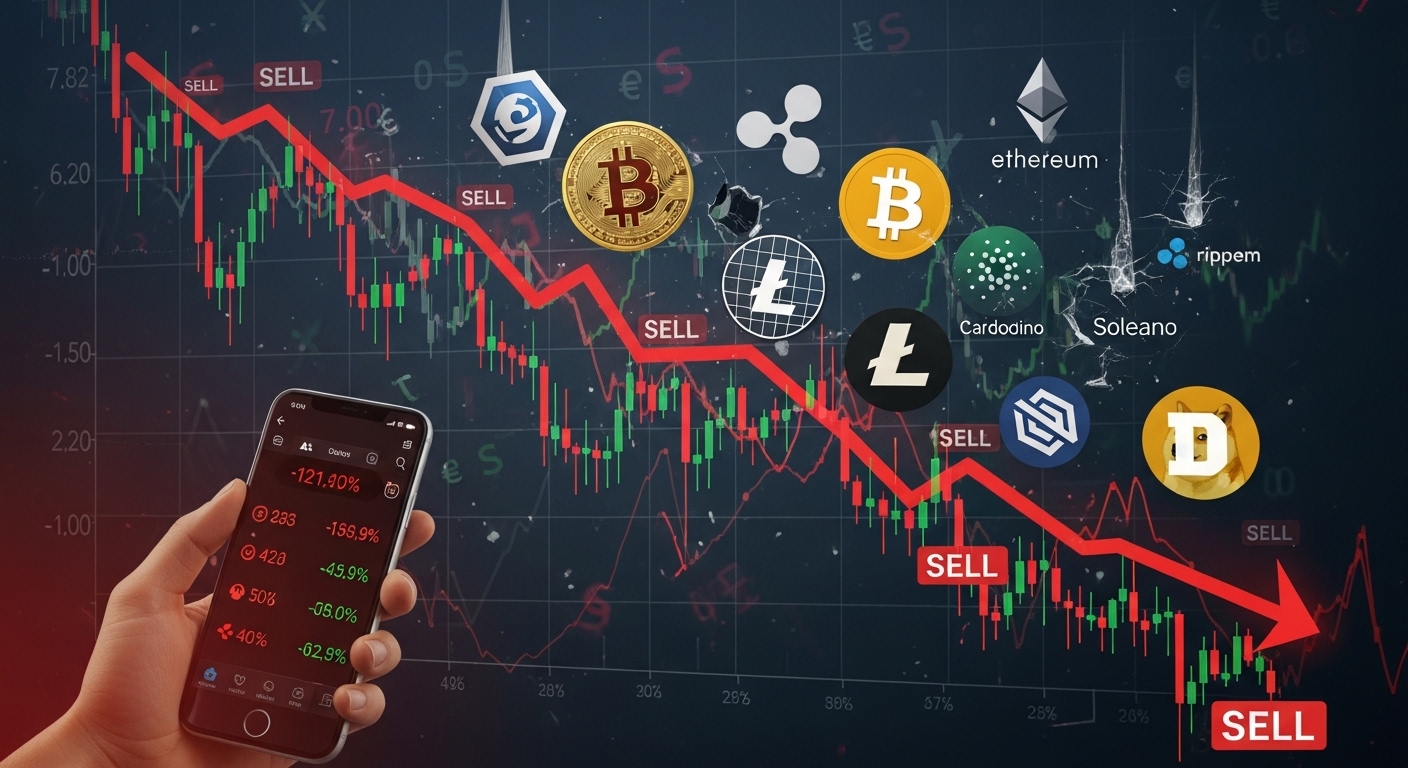
To understand whether this extreme level of altcoin sell pressure signals a bottom, history offers valuable insights. In previous market cycles, particularly during the aftermath of the 2018 bear market and the mid-cycle correction in 2022, similar spikes in selling activity were recorded.
When sell pressure reaches an extreme, it often reflects capitulation. Capitulation occurs when investors who have been holding through losses finally decide to exit their positions. This emotional surrender tends to happen near market bottoms because most sellers have already exhausted their willingness to hold.
During previous cycles, once altcoin sell pressure peaked, accumulation quietly began. Long-term investors, venture funds, and strategic traders started building positions at discounted prices. Over time, selling diminished, volatility stabilized, and a gradual recovery phase emerged.
However, it is important to recognize that bottoms are rarely formed in a single dramatic event. Instead, they are typically processes marked by sideways consolidation, reduced volatility, and improving on-chain metrics.
On-Chain Metrics and Market Sentiment
On-chain analysis provides deeper insight into whether current altcoin sell pressure represents panic or strategic repositioning. Several indicators are worth examining.
Exchange inflows have increased significantly. When large volumes of tokens move to exchanges, it often indicates intent to sell. Yet at the same time, long-term holder supply appears relatively stable for major altcoins. This divergence suggests that short-term traders may be driving much of the recent selling activity.
Another critical metric is the realized loss across altcoin networks. Elevated realized losses often coincide with capitulation phases. Historically, when realized losses spike sharply, markets tend to stabilize soon after as weak hands exit.
The market sentiment index also reveals extreme fear levels. In crypto, extreme fear has frequently served as a contrarian indicator. When participants are overwhelmingly bearish, selling pressure may already be largely priced in.
Despite these signals, caution remains necessary. Sentiment can remain depressed for extended periods, and altcoin sell pressure can persist longer than anticipated in prolonged bear markets.
Macroeconomic Forces Shaping the Crypto Landscape
No analysis of altcoin sell pressure would be complete without considering the broader macroeconomic backdrop. Global markets are navigating complex conditions, including central bank tightening, geopolitical tensions, and fluctuating commodity prices.
Higher interest rates make risk-free assets more attractive relative to speculative investments. This dynamic reduces capital inflows into altcoins, increasing vulnerability to sell-offs. Furthermore, regulatory uncertainty in key jurisdictions adds additional pressure to crypto valuations.
At the same time, institutional adoption continues to progress slowly but steadily. Large financial institutions are building blockchain infrastructure and exploring tokenization initiatives. While these developments may not immediately offset altcoin sell pressure, they contribute to long-term structural growth within the ecosystem.
The interplay between macro conditions and internal crypto dynamics ultimately determines whether extreme sell pressure evolves into a bottom formation or extends into deeper declines.
Investor Psychology During Extreme Sell-Offs
Market psychology plays a central role in periods of heightened altcoin sell pressure. Emotional reactions often amplify price movements beyond fundamental valuations.
Fear-driven selling is common when prices break key support levels. As technical levels fail, stop-loss orders trigger, reinforcing downward momentum. Social media sentiment turns negative, reinforcing bearish narratives.
Yet paradoxically, the most pessimistic moments often coincide with generational buying opportunities. Legendary investors frequently emphasize that maximum pessimism creates maximum opportunity.
Understanding this psychological cycle is crucial. When altcoin sell pressure hits a five-year extreme, it may reflect widespread exhaustion rather than the beginning of further panic.
Technical Analysis: Signs of Bottom Formation

Technical indicators can provide additional context. Oversold conditions on the relative strength index suggest that many altcoins are trading at historically depressed momentum levels. When RSI readings remain below traditional thresholds for extended periods, markets often prepare for relief rallies.
Volume analysis also offers clues. If altcoin sell pressure is accompanied by declining volume over time, it may signal that sellers are losing conviction. Conversely, sustained high-volume breakdowns could indicate unresolved downside risk.
Another critical aspect is the structure of price action. Bottom formations often involve higher lows on momentum indicators, even if price makes marginal new lows. These bullish divergences hint at weakening sell pressure.
However, technical signals alone are insufficient. They must align with improving sentiment, stabilizing macro conditions, and strengthening on-chain fundamentals to confirm a durable bottom.
Capital Rotation and Bitcoin Dominance
Bitcoin dominance often rises during periods of intense altcoin sell pressure. Investors seek perceived stability in Bitcoin, reducing exposure to higher-volatility tokens. This pattern has repeated across multiple cycles.
When Bitcoin dominance peaks and begins to decline, it historically marks the start of altcoin recovery phases. Therefore, monitoring shifts in dominance trends is essential.
If current dominance levels plateau while altcoin sell pressure decreases, it may indicate that capital is slowly rotating back into the broader crypto ecosystem.
Accumulation Phases and Long-Term Opportunity
Extreme sell pressure often sets the stage for accumulation. During accumulation, price action becomes less volatile, and strong hands gradually absorb supply from weaker participants.
Institutional investors and venture funds typically operate quietly during these periods. They prioritize strategic entry points rather than chasing momentum.
Long-term holders often increase their positions when valuations reach historically attractive levels relative to network activity and development progress. Metrics such as network growth, developer activity, and total value locked can provide insights into underlying ecosystem health beyond short-term price fluctuations.
If altcoin sell pressure continues to decline while these fundamental metrics stabilize or improve, the probability of a bottom formation increases.
Risks That Could Prolong the Downtrend
Despite encouraging signals, risks remain. Further macro deterioration could trigger additional waves of selling. Regulatory crackdowns, major exchange failures, or unexpected black swan events could amplify altcoin sell pressure once again.
Liquidity conditions also matter significantly. If global liquidity tightens further, speculative assets may struggle to recover quickly.
Therefore, investors must balance optimism with prudent risk management. Identifying a bottom does not require perfect timing but rather disciplined accumulation strategies aligned with long-term conviction.
Is This the Bottom Signal Investors Have Waited For?
Determining whether the current five-year extreme in altcoin sell pressure represents the definitive bottom requires synthesizing all available data. Historical patterns suggest that such extremes often occur near cycle lows. On-chain metrics point toward capitulation. Sentiment indicators show widespread fear. Technical charts reveal oversold conditions.
Yet confirmation requires stabilization. Sell pressure must ease. Volatility should contract. Accumulation patterns need to emerge.
If these conditions align, this period could indeed mark the beginning of a new growth phase. However, patience remains essential. Market cycles unfold over months and years, not days.
Conclusion
Altcoin sell pressure hitting a five-year extreme is undeniably significant. It reflects a market gripped by caution, uncertainty, and emotional fatigue. But history demonstrates that extreme selling activity frequently precedes recovery rather than collapse.
While no indicator guarantees that the bottom is in, multiple signals suggest that the market may be entering a transitional phase. Investors who approach this environment with disciplined strategies, diversified portfolios, and long-term perspectives may ultimately benefit from the volatility that others fear.
As always in crypto, risk management and informed decision-making remain paramount. Whether this proves to be the ultimate bottom or merely a stepping stone, understanding the forces behind altcoin sell pressure empowers investors to navigate the market with greater clarity and confidence.
FAQs
Q: What does it mean when altcoin sell pressure reaches a five-year extreme?
When altcoin sell pressure reaches a five-year extreme, it indicates that selling activity across alternative cryptocurrencies has surged to levels not seen in half a decade. This typically reflects heightened fear, capitulation among retail investors, and possible liquidation of leveraged positions. Historically, such extremes have sometimes coincided with market bottoms because most willing sellers have already exited, reducing future downside momentum.
Q: How can investors identify whether the bottom is truly forming?
Investors can look for multiple converging signals rather than relying on a single indicator. Stabilizing prices, decreasing exchange inflows, improving on-chain activity, rising long-term holder supply, and reduced volatility are common characteristics of bottom formations. Monitoring sentiment shifts from extreme fear toward neutrality can also provide clues that altcoin sell pressure is easing and accumulation may be underway.
Q: Is extreme altcoin sell pressure always followed by a recovery?
Extreme altcoin sell pressure does not guarantee an immediate recovery. While historical cycles show that sharp capitulation events often precede rebounds, external factors such as macroeconomic conditions, regulatory developments, and liquidity trends can delay recovery. Markets may also experience extended consolidation phases before upward momentum resumes.
Q: Should long-term investors buy during periods of heavy sell pressure?
Long-term investors often view heavy sell pressure as an opportunity to accumulate quality assets at discounted prices. However, it is essential to conduct thorough research, diversify holdings, and use risk management strategies. Gradual accumulation rather than attempting to time the exact bottom can help reduce exposure to continued volatility while benefiting from potential long-term growth.
Q: What role does Bitcoin dominance play during extreme altcoin sell pressure?
Bitcoin dominance typically rises when altcoin sell pressure intensifies, as investors rotate capital into what they perceive as a safer crypto asset. Monitoring changes in dominance trends can provide insight into potential recovery phases. When dominance stabilizes or declines, it may signal that confidence is returning to altcoins and that broader market recovery could follow.