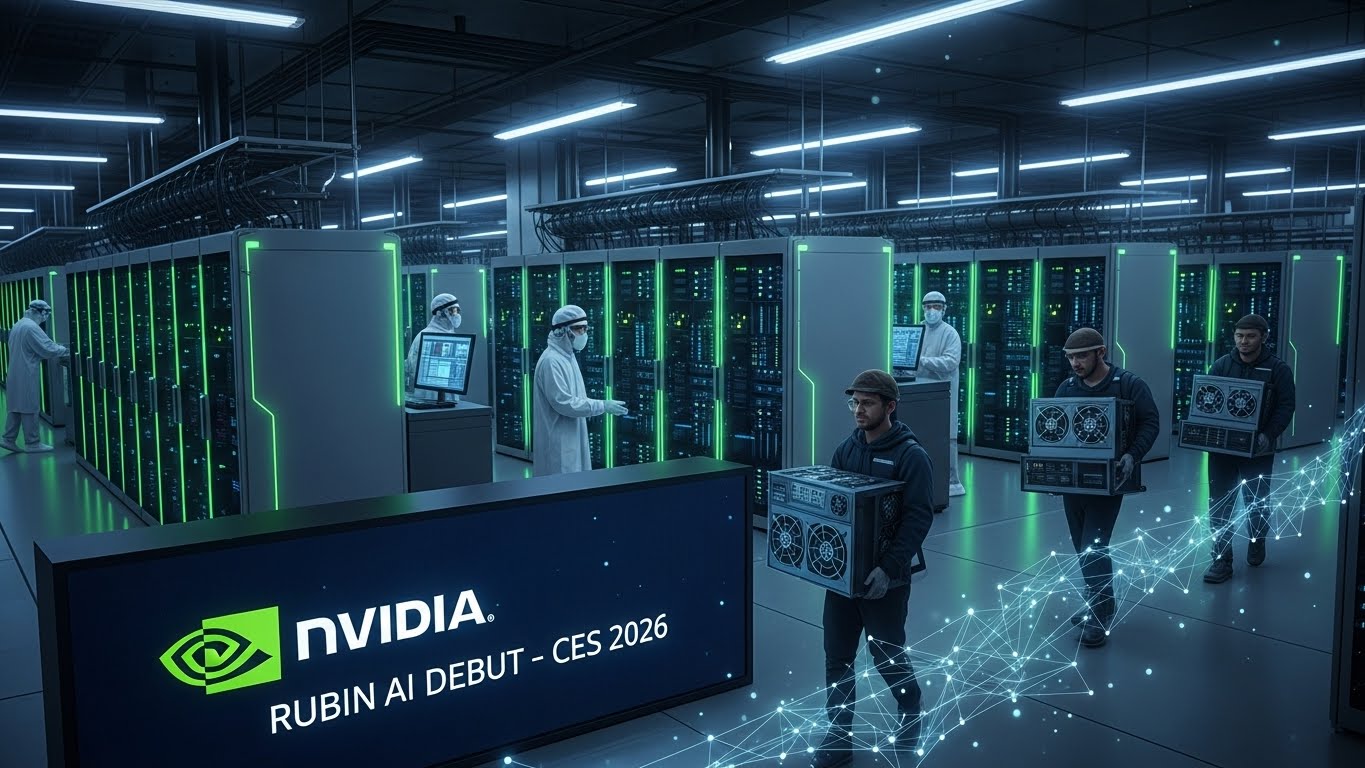
The announcement that Bitcoin miners rush to data-centre infrastructure as Nvidia debuts Rubin AI at CES 2026 marks a pivotal moment in the convergence of cryptocurrency mining and artificial intelligence. For years, Bitcoin mining has been associated with specialized facilities optimized for hashing power, energy efficiency, and scale. At the same time, AI computing has followed its own trajectory, centered around advanced GPUs, cloud data centres, and enterprise-grade infrastructure. Nvidia’s debut of Rubin AI at CES 2026 has accelerated a trend already in motion, pushing Bitcoin miners to rethink their operational models and reposition themselves within the broader digital infrastructure economy.
This shift is not merely a reaction to a single product launch. It reflects deeper structural changes across the crypto mining industry, global energy markets, and the explosive demand for AI compute. As Bitcoin miners rush to data-centre infrastructure, they are responding to declining block rewards, increasing competition, and the need for diversified revenue streams. Nvidia’s Rubin AI platform, unveiled on one of the world’s most influential technology stages, symbolizes the future of high-performance computing where AI workloads dominate demand for processing power. For miners, this represents both a challenge and an opportunity.
Understanding why Bitcoin miners are moving toward data-centre infrastructure requires examining technological evolution, economic pressures, and strategic realignment. This article explores how Nvidia’s Rubin AI debut at CES 2026 intersects with the mining sector’s transformation, what this means for the future of Bitcoin mining, and how the boundaries between crypto infrastructure and AI computing are rapidly dissolving.
The Evolution of Bitcoin Mining Infrastructure
Bitcoin mining has evolved dramatically since its early days. Initially, mining was performed on consumer-grade CPUs, then GPUs, and eventually specialized ASIC hardware designed solely for hashing. These changes were driven by the need for efficiency as network difficulty increased. Over time, mining facilities grew larger, more centralized, and increasingly professionalized. However, traditional mining farms remained distinct from enterprise data centres in terms of design, redundancy, and workload flexibility.
As Bitcoin miners rush to data-centre infrastructure, the distinction between mining farms and cloud computing facilities is fading. Modern data centres offer superior cooling systems, power management, and uptime guarantees. These features are becoming essential as mining margins tighten and operational efficiency becomes critical. The shift also reflects the recognition that infrastructure capable of supporting mining can be repurposed for other compute-intensive workloads, particularly AI.
This evolution highlights a broader trend toward infrastructure convergence, where digital assets and high-performance computing share the same physical and operational foundations. Bitcoin miners adopting data-centre standards are positioning themselves to participate in multiple markets rather than relying solely on block rewards and transaction fees.
Nvidia’s Rubin AI Debut at CES 2026
Nvidia’s unveiling of Rubin AI at CES 2026 sent a clear signal about the future of artificial intelligence computing. Designed as a next-generation AI platform, Rubin AI emphasizes scalability, efficiency, and performance for training and inference workloads. Its debut underscores Nvidia’s commitment to pushing the boundaries of AI acceleration, reinforcing its dominance in the GPU and data-centre markets.
For Bitcoin miners, the Rubin AI announcement is more than a headline. It highlights the growing demand for data-centre-grade infrastructure capable of supporting AI workloads at scale. Nvidia’s roadmap suggests that AI compute requirements will continue to expand rapidly, placing pressure on existing data-centre capacity. This creates a unique opportunity for miners who already operate large-scale facilities with access to power and cooling.
The intersection of Bitcoin mining and Rubin AI reflects a shift in how compute resources are valued. Hashing power alone is no longer the sole metric of success. Instead, flexibility, adaptability, and the ability to host diverse workloads are becoming strategic advantages. As miners rush to data-centre infrastructure, they are aligning themselves with Nvidia’s vision of a future dominated by AI-driven demand.
Why Bitcoin Miners Are Rushing to Data-Centre Infrastructure
The rush toward data-centre infrastructure among Bitcoin miners is driven by multiple economic and operational factors. One of the most significant is the pressure on mining profitability. As block rewards decline and competition increases, miners must optimize costs and explore alternative revenue streams. Data-centre infrastructure provides the flexibility needed to pivot between mining and other compute services.
Another critical factor is energy efficiency. Data centres are designed to maximize power utilization effectiveness, reducing waste and improving margins. This is especially important as regulators and investors scrutinize the environmental impact of Bitcoin mining. By adopting data-centre standards, miners can better integrate renewable energy sources and implement advanced cooling technologies.
The growing demand for AI computing capacity further accelerates this shift. Nvidia’s Rubin AI debut has amplified awareness of the value of high-performance infrastructure. Miners who invest in data-centre capabilities can lease compute resources to AI firms, cloud providers, or research institutions during periods when mining is less profitable. This diversification reduces reliance on Bitcoin price cycles and enhances long-term sustainability.
The Convergence of Crypto Mining and AI Computing
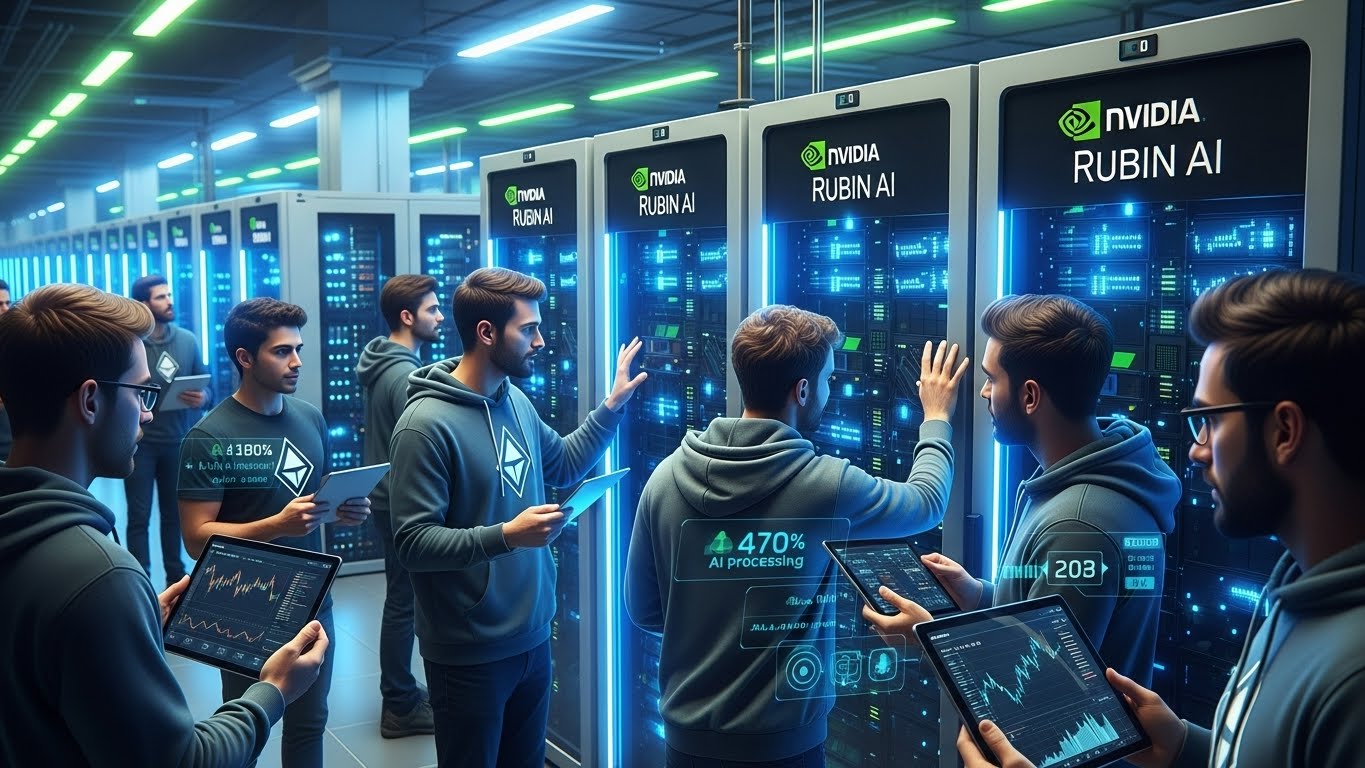
The convergence of crypto mining and AI computing represents a fundamental change in how digital infrastructure is utilized. Traditionally, mining hardware was highly specialized and limited to a single function. In contrast, AI workloads require versatile, scalable systems capable of handling complex computations. Data-centre infrastructure bridges this gap, enabling miners to support both activities.
As Bitcoin miners rush to data-centre infrastructure, they are embracing a model where compute flexibility is paramount. This convergence allows for dynamic allocation of resources based on market conditions. When Bitcoin mining profitability is high, infrastructure can prioritize hashing. When AI demand surges, resources can be redirected to support machine learning workloads.
Nvidia’s Rubin AI plays a central role in this convergence by setting new benchmarks for AI performance. Its debut at CES 2026 reinforces the idea that future-proof infrastructure must accommodate evolving workloads. Miners who adapt to this reality gain a competitive edge in an increasingly interconnected digital economy.
Economic Implications for the Bitcoin Mining Industry
The economic implications of this shift are profound. By transitioning to data-centre infrastructure, Bitcoin miners can stabilize revenues and reduce exposure to market volatility. This is particularly important in an environment where mining rewards are halved periodically, compressing margins over time.
Data-centre integration also opens doors to institutional partnerships. Enterprises seeking AI compute capacity value reliability, security, and scalability, all of which are hallmarks of modern data centres. Miners who meet these standards can attract long-term contracts that provide predictable cash flows.
However, this transition requires significant capital investment. Upgrading facilities, adopting enterprise-grade hardware, and meeting compliance requirements are costly endeavors. The miners who succeed will likely be those with strong balance sheets and strategic foresight. The result may be further consolidation within the industry, as smaller operators struggle to keep pace with infrastructure demands.
Energy Dynamics and Sustainability Considerations
Energy consumption has always been a central concern in Bitcoin mining. As miners rush to data-centre infrastructure, energy dynamics are shifting in important ways. Data centres are designed to optimize energy usage through advanced cooling systems, load balancing, and renewable integration. These features align with growing expectations for sustainable operations.
Nvidia’s Rubin AI debut highlights the energy intensity of modern AI workloads, which further emphasizes the need for efficient infrastructure. By adopting data-centre standards, miners can better manage power demands and reduce environmental impact. This shift also improves public perception of the mining industry, which has often been criticized for its carbon footprint.
Sustainability is becoming a competitive differentiator. Investors and partners increasingly favor companies that demonstrate responsible energy practices. Bitcoin miners who embrace data-centre infrastructure are better positioned to meet these expectations while supporting both mining and AI applications.
Strategic Diversification and Risk Management
Strategic diversification is a key motivation behind the move to data-centre infrastructure. Bitcoin mining revenues are inherently volatile, influenced by price fluctuations, network difficulty, and regulatory developments. By expanding into AI and cloud computing services, miners can mitigate these risks.
The debut of Rubin AI at CES 2026 serves as a catalyst for this diversification. It underscores the growing importance of AI across industries and the corresponding demand for compute resources. Miners who align with this trend can transform their operations from single-purpose facilities into multi-use digital infrastructure hubs.
Risk management also extends to regulatory considerations. Data centres often operate under clearer regulatory frameworks compared to crypto mining. By repositioning themselves as providers of general-purpose computing services, miners may reduce regulatory uncertainty and improve access to institutional capital.
Competitive Landscape After CES 2026
The competitive landscape of both mining and AI computing is evolving rapidly. Nvidia’s Rubin AI debut intensifies competition among data-centre operators, cloud providers, and infrastructure investors. Bitcoin miners entering this space must compete with established players that have decades of experience in enterprise computing.
However, miners also bring unique advantages. Many already control significant power capacity and operate in regions with favorable energy costs. By upgrading to data-centre standards, they can leverage these assets more effectively. The ability to scale quickly and repurpose infrastructure gives miners a degree of agility that traditional data-centre operators may lack. As more miners rush to data-centre infrastructure, competition within the mining industry itself will also increase. Those who adapt early may secure strategic partnerships and market share, while laggards risk obsolescence.
Long-Term Outlook for Bitcoin Miners and AI Infrastructure
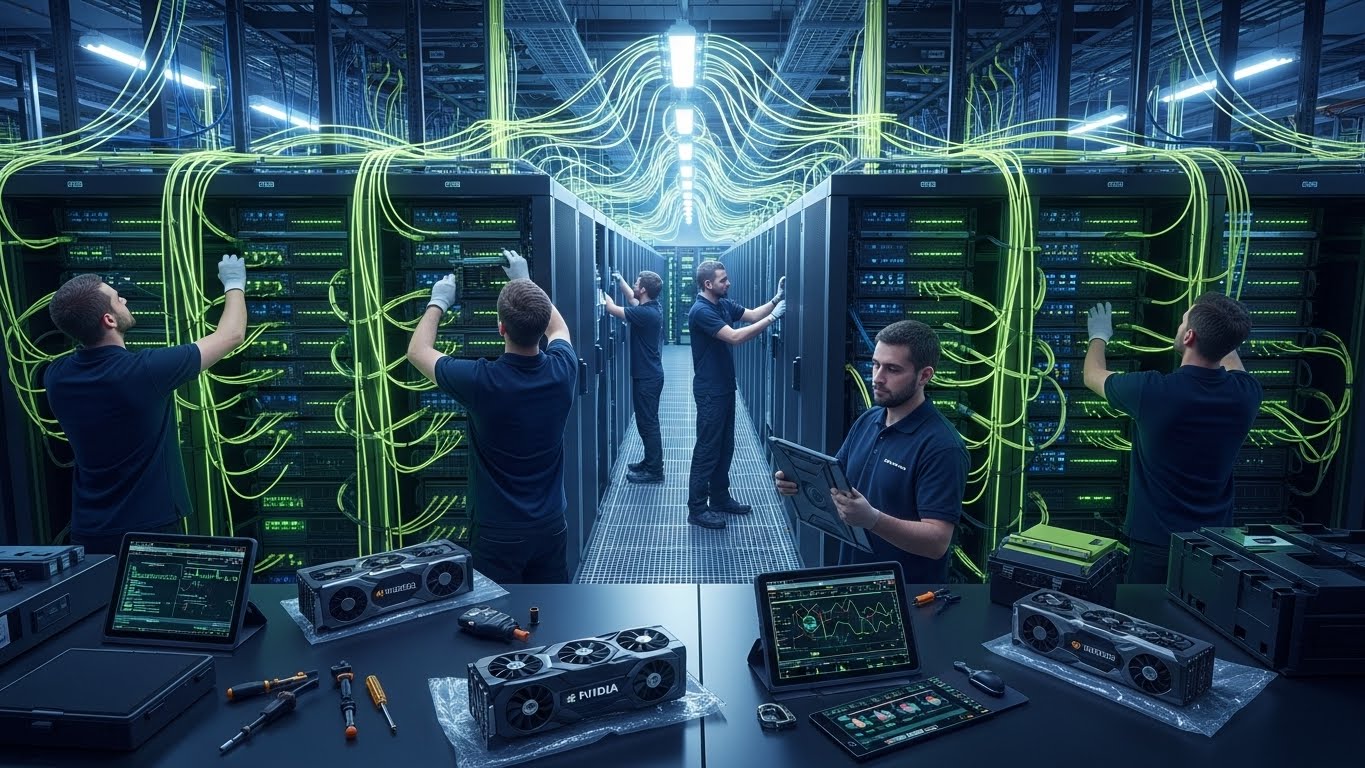
Looking ahead, the long-term outlook suggests deeper integration between Bitcoin mining and AI infrastructure. The debut of Rubin AI at CES 2026 is likely just one milestone in a broader trend toward compute convergence. As AI applications proliferate, demand for flexible, high-performance infrastructure will continue to grow.
Bitcoin miners who successfully transition to data-centre models can play a significant role in meeting this demand. Their evolution from pure miners to diversified infrastructure providers reflects the maturation of the crypto industry. Rather than existing on the fringes of the tech ecosystem, miners are becoming integral participants in the digital economy.
This transformation also has implications for Bitcoin itself. A more financially stable mining industry enhances network security and resilience. By diversifying revenue streams, miners reduce the risk of mass shutdowns during market downturns, contributing to the long-term health of the Bitcoin network.
Conclusion
The moment when Bitcoin miners rush to data-centre infrastructure as Nvidia debuts Rubin AI at CES 2026 represents a defining shift in digital infrastructure strategy. It illustrates how economic pressures, technological innovation, and market demand converge to reshape entire industries. Nvidia’s Rubin AI highlights the explosive growth of AI computing, while miners’ response underscores their adaptability and strategic evolution.
By embracing data-centre infrastructure, Bitcoin miners are positioning themselves at the intersection of crypto and AI, transforming challenges into opportunities. This shift promises greater sustainability, diversified revenues, and deeper integration into the global technology ecosystem. As the boundaries between mining and computing continue to blur, the future of both industries will be shaped by those who recognize the value of convergence and act decisively.
FAQs
Q: Why are Bitcoin miners moving toward data-centre infrastructure after CES 2026?
Bitcoin miners are moving toward data-centre infrastructure to improve efficiency, diversify revenue streams, and capitalize on rising demand for AI computing. Nvidia’s Rubin AI debut at CES 2026 highlighted the growing value of scalable, flexible infrastructure that can support both mining and AI workloads.
Q: How does Nvidia’s Rubin AI impact the Bitcoin mining industry?
Nvidia’s Rubin AI emphasizes the future importance of high-performance AI computing, increasing demand for data-centre capacity. This creates opportunities for Bitcoin miners to repurpose or expand their infrastructure to host AI workloads alongside traditional mining operations.
Q: Does this shift mean Bitcoin mining is becoming less important?
Bitcoin mining remains essential for network security, but its role is evolving. By adopting data-centre infrastructure, miners are enhancing their operations and reducing reliance on mining alone, making the industry more resilient rather than less relevant.
Q: What are the sustainability benefits of miners using data-centre infrastructure?
Data-centre infrastructure offers better energy efficiency, advanced cooling, and easier integration of renewable energy sources. These features help reduce the environmental impact of mining and align operations with sustainability expectations.
Q: Will this convergence affect the decentralization of Bitcoin mining?
The shift toward data-centre infrastructure may increase consolidation, but it also strengthens miners financially. A more stable mining sector can support long-term decentralization by ensuring consistent participation and network security across market cycles.