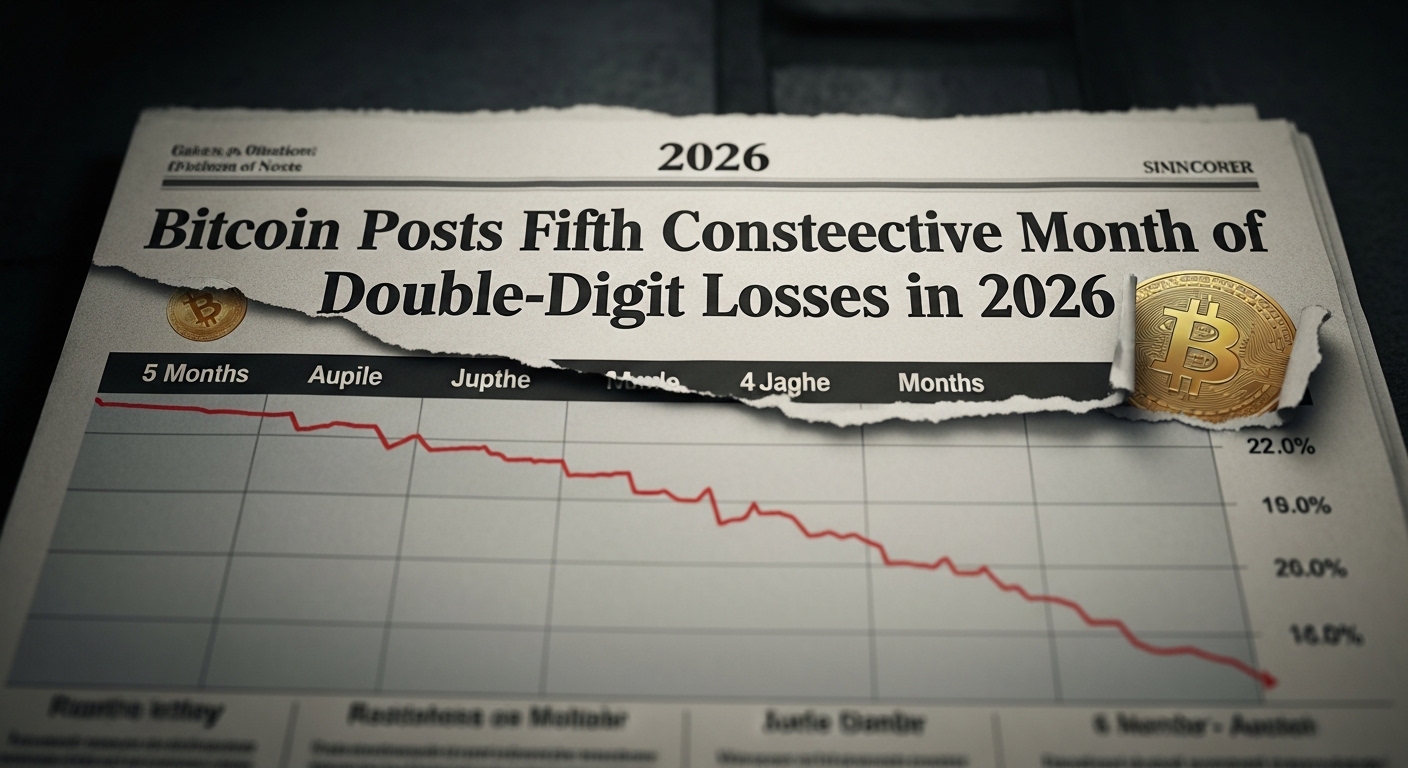
Bitcoin posts fifth consecutive month of double-digit losses in 2026, marking one of the most challenging stretches in its history. For a digital asset often associated with rapid gains and explosive bull markets, such an extended downturn has shaken confidence across the cryptocurrency ecosystem. Investors, traders, institutions, and policymakers are closely monitoring this phase, trying to determine whether it represents a prolonged bear market or a transitional correction before the next cycle.
The reality is that Bitcoin has always been cyclical. Periods of rapid appreciation are frequently followed by steep corrections. However, five straight months of double-digit declines in 2026 have amplified concerns about liquidity pressures, macroeconomic tightening, and changing investor behavior. This downturn has also sparked deeper discussions about crypto market volatility, digital asset regulation, and the long-term sustainability of decentralized finance.
Understanding why Bitcoin posts fifth consecutive month of double-digit losses in 2026 requires analyzing broader economic forces, on-chain data, institutional trends, and shifting market psychology. This article explores these dimensions in detail, offering a comprehensive view of the current downturn and what it could mean for the future of the world’s largest cryptocurrency.
Understanding the Significance of Five Consecutive Monthly Losses
Five consecutive months of double-digit losses represent more than just short-term volatility. They signal sustained selling pressure and a significant change in market sentiment.
Historical Context of Bitcoin Bear Markets
Bitcoin has experienced severe corrections before. Past bear markets saw drawdowns exceeding seventy percent from peak levels. However, the current stretch in 2026 stands out because of its consistency. Each month recorded double-digit percentage declines, reinforcing the narrative that Bitcoin posts fifth consecutive month of double-digit losses in 2026 as a defining chapter in its market history.
In earlier cycles, sharp declines were often followed by temporary rebounds. This time, recovery attempts have struggled to gain momentum. The prolonged downturn has weighed on investor confidence, causing some participants to exit positions entirely while others shift toward defensive strategies.
The Psychological Impact on Investors
Market psychology plays a crucial role in cryptocurrency movements. When Bitcoin posts fifth consecutive month of double-digit losses in 2026, fear and uncertainty intensify. Retail investors who entered during bullish phases may panic sell, while institutional investors reassess risk exposure.
The repeated monthly declines create a self-reinforcing cycle. Negative headlines influence sentiment, which leads to further selling pressure. This dynamic highlights the importance of understanding market sentiment analysis and behavioral finance principles in crypto markets.
Macroeconomic Pressures Driving the Downturn
The broader global economy has significantly influenced Bitcoin’s performance in 2026.
Interest Rates and Liquidity Constraints
Rising interest rates and tighter monetary policies have reduced liquidity across financial markets. When central banks restrict capital flow, speculative assets often suffer. Bitcoin, frequently categorized as a high-risk asset, faces heightened vulnerability in such environments.
As Bitcoin posts fifth consecutive month of double-digit losses in 2026, analysts point to global liquidity contraction as a primary factor. Reduced access to cheap capital discourages leveraged positions and speculative trading, amplifying downward momentum.
Strength of the U.S. Dollar and Risk-Off Sentiment
A stronger U.S. dollar typically pressures risk assets, including cryptocurrencies. In 2026, sustained dollar strength and risk-off sentiment have pushed investors toward traditional safe-haven assets. This shift reflects broader concerns about economic stability and geopolitical uncertainty.
Bitcoin’s narrative as “digital gold” has faced renewed scrutiny. While some still view it as a hedge, others question its performance during prolonged macroeconomic stress.
On-Chain Data and Market Structure Analysis
On-chain metrics provide valuable insights into network activity and investor behavior.
Declining Network Activity
When Bitcoin posts fifth consecutive month of double-digit losses in 2026, on-chain data reveals reduced transaction volumes and slower growth in active addresses. Lower activity suggests diminished enthusiasm among users and traders.
This slowdown affects mining profitability and network dynamics. As prices decline, some miners may struggle to maintain operations, potentially impacting blockchain security and hash rate distribution.
Exchange Flows and Whale Behavior
Exchange inflows often indicate selling pressure. In 2026, increased transfers of Bitcoin to exchanges have coincided with price drops. Large holders, commonly referred to as whales, have adjusted positions, contributing to volatility.
Monitoring crypto exchange reserves and wallet movements helps analysts anticipate potential price swings. The consistent pattern of outflows to exchanges aligns with the narrative that Bitcoin posts fifth consecutive month of double-digit losses in 2026 due to sustained distribution.
Institutional Investors and Market Repositioning
Institutional participation has grown significantly over recent years. However, their strategies evolve in response to market conditions.
Portfolio Rebalancing and Risk Management
Institutional investors prioritize risk management. During extended downturns, portfolio rebalancing often involves reducing exposure to high-volatility assets. This trend has played a role as Bitcoin posts fifth consecutive month of double-digit losses in 2026.
Some institutions have shifted capital toward more stable financial instruments or diversified into other asset classes. The recalibration reflects cautious sentiment rather than a complete abandonment of cryptocurrency investments.
Regulatory Developments and Compliance Pressures
Increased regulatory scrutiny has added complexity to institutional crypto involvement. Clearer frameworks can support adoption, but uncertainty during transitional phases may discourage aggressive positioning.
Discussions surrounding digital asset regulation, compliance standards, and taxation policies influence institutional behavior. As regulations evolve, investor confidence may gradually stabilize.
Retail Investors and Changing Market Behavior
Retail investors remain a powerful force in cryptocurrency markets.
The Role of Social Media and Sentiment
Social media platforms amplify narratives during downturns. When Bitcoin posts fifth consecutive month of double-digit losses in 2026, online discussions often reflect anxiety and skepticism.
Retail traders, influenced by trending sentiment, may react emotionally rather than strategically. This behavior can intensify volatility, especially during sharp price movements.
Long-Term Holders Versus Short-Term Traders
Not all retail investors respond identically. Long-term holders, often referred to as “HODLers,” tend to maintain positions despite market turbulence. Historical data shows that strong hands often accumulate during bear markets.
The divergence between short-term traders and long-term holders shapes market structure. As speculative participants exit, remaining holders may provide a foundation for eventual recovery.
Mining Industry Challenges in 2026
Bitcoin mining plays a vital role in network stability and supply issuance.
Profitability Pressures and Energy Costs
Declining prices directly affect mining profitability. When Bitcoin posts fifth consecutive month of double-digit losses in 2026, miners face compressed margins. Rising energy costs further strain operations.
Some mining companies may downsize or consolidate, potentially influencing hash rate dynamics. Despite these challenges, network resilience has historically remained intact during downturns.
Hash Rate Trends and Network Security
Hash rate fluctuations often correlate with price movements. While short-term dips may occur, long-term trends typically stabilize as inefficient miners exit and stronger operators remain.
The ongoing downturn tests the resilience of the proof-of-work consensus mechanism, reinforcing the importance of sustainable mining practices.
The Broader Cryptocurrency Market Impact
Bitcoin’s performance often influences the entire crypto ecosystem.
Altcoins and Market Correlation
When Bitcoin posts fifth consecutive month of double-digit losses in 2026, altcoins frequently follow similar trajectories. High correlation between major cryptocurrencies amplifies systemic risk. However, some projects demonstrate relative strength due to unique use cases or technological advancements. Observing divergence patterns can provide insight into evolving market dynamics.
DeFi and NFT Ecosystem Adjustments
Extended downturns impact decentralized finance protocols and NFT markets. Lower asset valuations reduce collateral value, affecting lending platforms and liquidity pools.
Despite these pressures, innovation continues. Developers focus on improving scalability, interoperability, and user experience, laying groundwork for future growth.
Is This a Capitulation Phase or a Strategic Reset?
Determining whether the current downturn represents capitulation or strategic consolidation remains challenging.
Signs of Capitulation
Capitulation occurs when widespread selling exhausts market participants. Indicators include high trading volumes during sharp declines and significant realized losses.
If Bitcoin posts fifth consecutive month of double-digit losses in 2026 as part of capitulation, the market may approach a bottom once selling pressure subsides.
Long-Term Structural Strength
Despite short-term weakness, Bitcoin’s fundamental attributes remain intact. Its decentralized design, limited supply, and global accessibility continue to attract supporters.
The resilience of blockchain technology, developer engagement, and ongoing innovation suggests that downturns may serve as recalibration periods rather than permanent setbacks.
Future Outlook for Bitcoin After Consecutive Losses
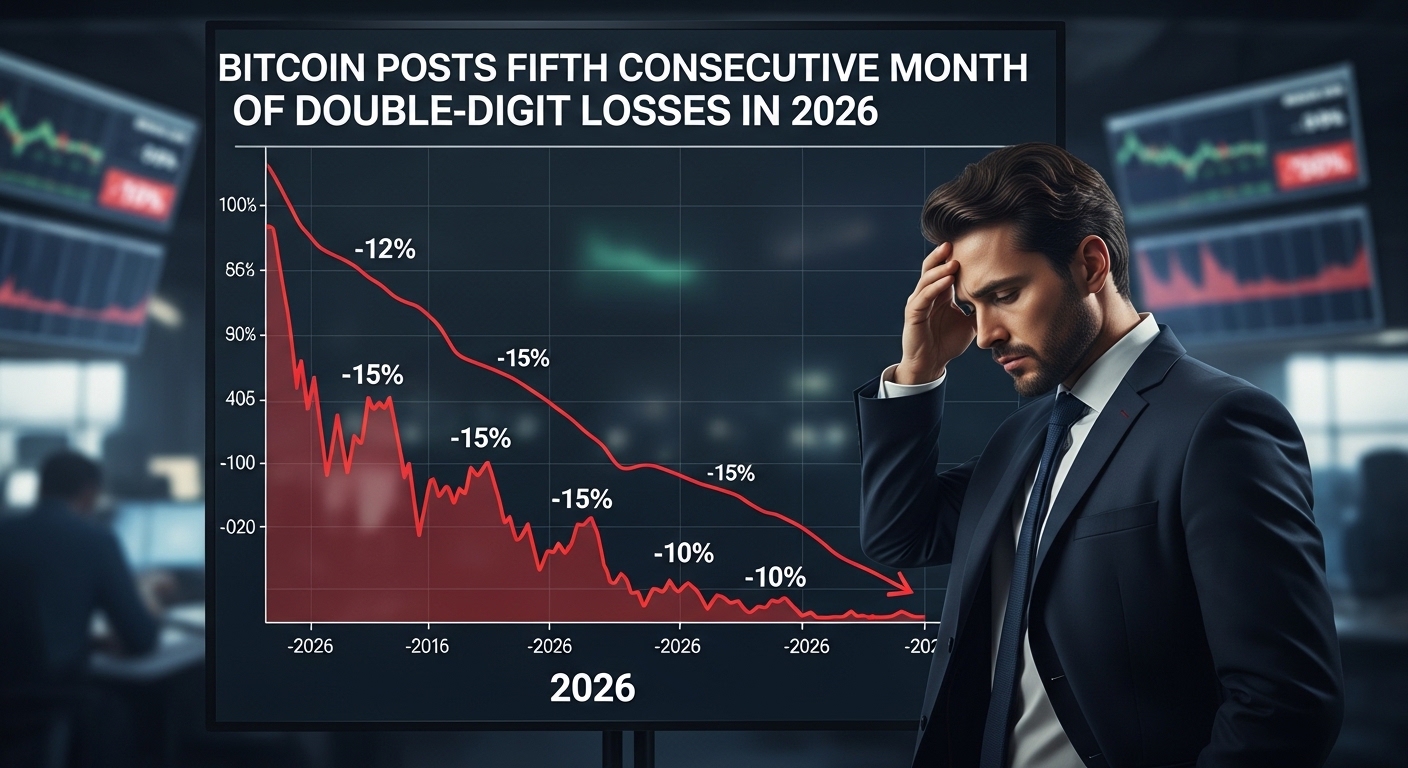
Projecting future performance requires balancing optimism with realism.
Potential Catalysts for Recovery
Catalysts could include improved macroeconomic conditions, increased institutional adoption, and regulatory clarity. Positive developments in crypto market adoption may restore confidence.
Market cycles historically transition from accumulation to expansion. While timing remains uncertain, long-term trends often favor innovation-driven assets.
Strategic Considerations for Investors
Investors navigating a period where Bitcoin posts fifth consecutive month of double-digit losses in 2026 must evaluate risk tolerance and time horizon. Diversification, disciplined entry strategies, and ongoing research remain critical.
Understanding both macroeconomic indicators and on-chain data enhances informed decision-making. Patience and resilience often define successful long-term investors in volatile markets.
Conclusion
Bitcoin posts fifth consecutive month of double-digit losses in 2026, marking a period of sustained pressure and heightened uncertainty. Macroeconomic tightening, shifting investor sentiment, regulatory developments, and changing market structure have collectively shaped this downturn.
While the extended losses challenge confidence, they also highlight the cyclical nature of cryptocurrency markets. History demonstrates that severe corrections can precede renewed growth, provided fundamental strength persists.
For investors and observers alike, the key lies in understanding the broader context. By analyzing macro trends, on-chain data, institutional strategies, and network resilience, stakeholders can navigate uncertainty with greater clarity. The path forward may remain volatile, but Bitcoin’s foundational principles continue to anchor its long-term narrative.
FAQs
Q: Why has Bitcoin posted five consecutive months of double-digit losses in 2026?
The sustained losses stem from a combination of macroeconomic tightening, reduced liquidity, regulatory uncertainty, and changing investor sentiment. Rising interest rates and a stronger dollar have pressured risk assets, while on-chain data indicates reduced activity and increased exchange inflows. These factors collectively contributed to the prolonged downturn.
Q: Does this extended decline signal the end of Bitcoin’s long-term growth potential?
Not necessarily. Bitcoin has experienced severe corrections in previous cycles before eventually recovering. While five consecutive months of double-digit losses in 2026 represent a significant challenge, long-term growth depends on continued adoption, innovation, and macroeconomic stabilization rather than short-term price movements.
Q: How are institutional investors responding to this downturn?
Many institutions are rebalancing portfolios and reducing exposure to high-volatility assets. Risk management strategies and regulatory considerations influence their decisions. However, some institutions maintain long-term positions, viewing downturns as potential accumulation opportunities rather than permanent exits.
Q: What role does mining play during extended bear markets?
Mining profitability declines when prices fall, potentially leading to consolidation among operators. However, the Bitcoin network historically adjusts through difficulty changes and market dynamics. While short-term strain may occur, long-term network security has generally remained stable.
Q: What indicators should investors monitor during prolonged losses?
Investors should track macroeconomic signals, on-chain metrics such as exchange flows and active addresses, institutional activity, and regulatory developments. Observing these indicators provides deeper insight into whether the market is approaching capitulation or preparing for gradual recovery.