
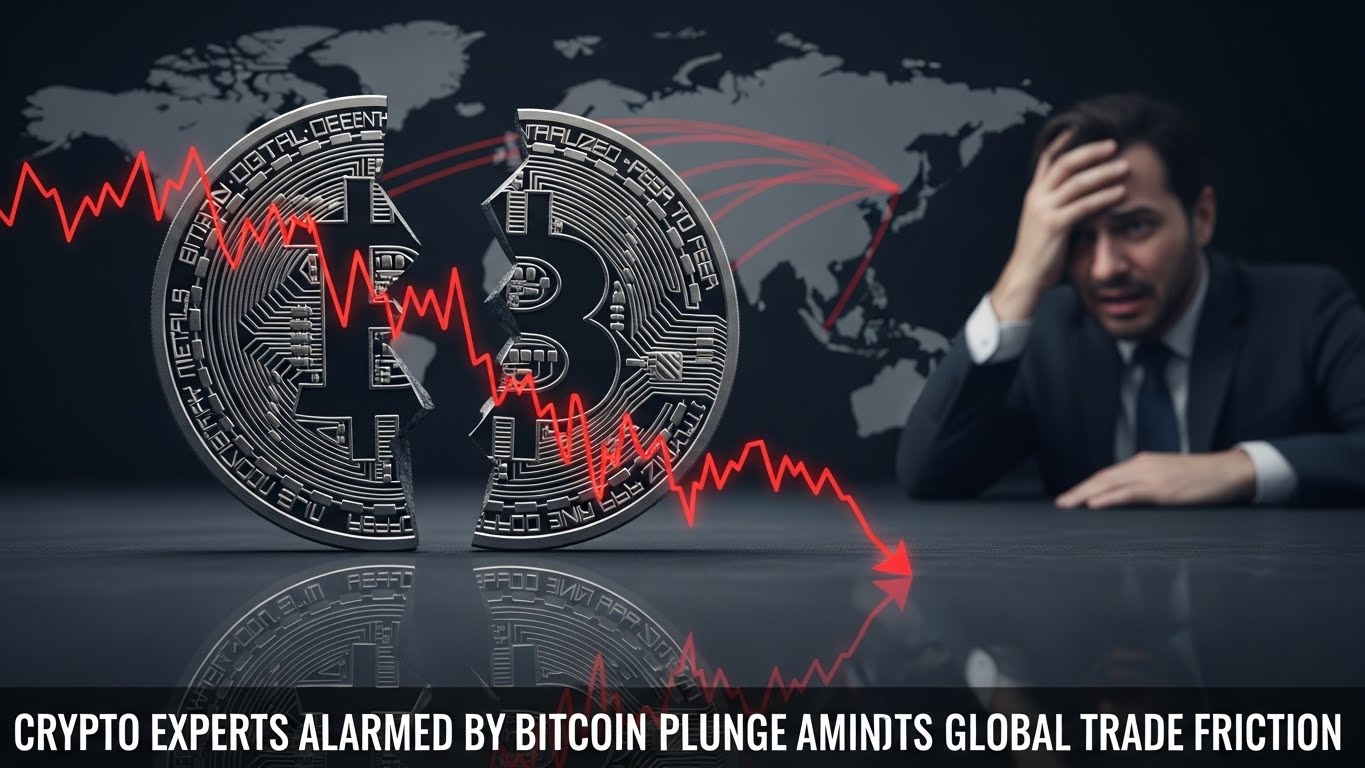
Bitcoin’s sudden price plunge has sent shockwaves through the cryptocurrency market, reigniting debate over the asset’s sensitivity to global macroeconomic forces. Long viewed by supporters as a hedge against inflation and financial instability, Bitcoin is once again being tested by real-world geopolitical and economic pressures. This latest downturn has alarmed crypto experts not simply because of the speed of the decline, but because of the broader context in which it occurred. Rising global trade friction, shifting monetary expectations, and fragile investor confidence have converged to create a volatile environment that challenges many long-held assumptions about Bitcoin’s behavior.
Unlike routine corrections driven by internal market cycles, this price plunge reflects external stressors spilling into digital asset markets. Bitcoin price volatility, global trade tensions, and macroeconomic uncertainty are now tightly intertwined, forcing traders and long-term holders alike to reassess risk exposure. As global supply chains strain and geopolitical disputes intensify, Bitcoin’s role within the broader financial ecosystem is being scrutinized more closely than ever. This article explores the causes behind Bitcoin’s sudden drop, how global trade friction is influencing crypto markets, and what this episode reveals about Bitcoin’s evolving identity.
Understanding the Immediate Trigger Behind Bitcoin’s Price Plunge
Bitcoin’s decline did not occur in isolation. It followed a series of global developments that heightened market anxiety.
Market Reaction to Escalating Trade Disputes
Renewed trade disputes between major economies have disrupted global markets, leading to increased volatility across equities, commodities, and currencies. Investors tend to reduce exposure to perceived risk assets during such periods, and Bitcoin has increasingly been grouped into this category. As tariffs, export restrictions, and retaliatory measures dominate headlines, capital flows shift toward traditional safe havens. This environment creates downward pressure on assets like Bitcoin that thrive on risk appetite and speculative interest.
Correlation With Traditional Financial Markets
Bitcoin’s correlation with traditional markets has strengthened over time. During periods of global stress, synchronized sell-offs become more common. The sudden plunge reflects this interconnectedness, as broader market weakness spilled into crypto trading desks.
This correlation challenges the narrative of Bitcoin as a fully independent asset, highlighting its growing integration into the global financial system.
Global Trade Friction as a Macro Catalyst
Global trade friction has become one of the most influential macroeconomic themes shaping market sentiment.
Supply Chain Disruptions and Economic Slowdown Fears
Trade conflicts disrupt supply chains, increase production costs, and slow economic growth. These effects ripple through global markets, raising concerns about corporate earnings and consumer demand. When economic uncertainty rises, speculative investments often suffer. Bitcoin, despite its decentralized nature, is not immune to these dynamics. The fear of a broader slowdown encourages profit-taking and defensive positioning.
Currency Volatility and Capital Preservation
Trade tensions often lead to currency volatility as governments adjust policies to protect domestic industries. While Bitcoin is sometimes viewed as a hedge against currency devaluation, short-term volatility can deter risk-averse investors. In the face of sudden shocks, many market participants prioritize liquidity and stability, temporarily sidelining digital assets.
Shifting Investor Sentiment in the Crypto Market

Investor psychology plays a critical role in amplifying price movements.
Fear, Uncertainty, and Rapid Sell-Offs
Bitcoin markets are highly sensitive to sentiment. Negative macro news can quickly trigger fear-driven selling, especially among leveraged traders. Liquidations accelerate price declines, creating a feedback loop that intensifies volatility. This dynamic explains why Bitcoin’s price plunge was sharp rather than gradual. Once key support levels were breached, automated trading systems and margin calls magnified the downturn.
Long-Term Holders Versus Short-Term Traders
While short-term traders react quickly to macro signals, long-term holders often interpret downturns differently. However, widespread uncertainty can test even the strongest conviction. The current episode has exposed a divide between those viewing the plunge as a buying opportunity and those reassessing Bitcoin’s risk profile in a changing global environment.
Bitcoin’s Evolving Role as a Risk Asset
Bitcoin’s classification within the investment landscape continues to evolve.
From Digital Gold to High-Beta Asset
The idea of Bitcoin as digital gold has gained traction over the years, but recent price action suggests it behaves more like a high-beta asset during periods of stress. Rather than acting as a safe haven, Bitcoin often mirrors risk-on and risk-off cycles. This behavior reflects the composition of its investor base, which includes hedge funds, proprietary trading firms, and retail traders sensitive to macro trends.
Institutional Participation and Market Dynamics
Institutional involvement has deepened Bitcoin’s liquidity but also tied it more closely to global financial conditions. When institutions rebalance portfolios in response to trade friction or policy shifts, Bitcoin can be affected alongside equities and commodities. This integration brings legitimacy but also exposes Bitcoin to the same macro headwinds as traditional assets.
The Role of Monetary Policy Expectations
Trade friction often influences central bank policy, which in turn affects crypto markets.
Interest Rate Uncertainty and Liquidity Conditions
Trade-related economic slowdowns can prompt central banks to reconsider interest rate trajectories. Expectations of tighter or looser monetary policy directly impact liquidity conditions across markets. Bitcoin tends to perform well in environments of abundant liquidity. When uncertainty clouds policy outlooks, speculative assets may face pressure as investors await clarity.
Inflation Concerns and Long-Term Narratives
While short-term price action may be negative, trade disruptions can fuel long-term inflation concerns. Over time, these conditions may revive interest in Bitcoin as an inflation hedge. This duality highlights the tension between short-term volatility and long-term investment narratives.
On-Chain Signals and Market Structure
Beyond macro factors, on-chain data provides insights into market behavior.
Exchange Flows and Liquidity Shifts
Increased Bitcoin transfers to exchanges often precede sell-offs, signaling intent to liquidate. During the recent plunge, elevated exchange inflows reflected heightened selling pressure. At the same time, reduced liquidity can exacerbate price swings, making markets more vulnerable to sudden moves.
Miner Behavior and Network Stability
Miners play a crucial role in Bitcoin’s ecosystem. During price declines, some miners may sell holdings to cover operational costs, adding to supply pressure. Despite short-term stress, the network’s fundamentals remain intact, underscoring the difference between price volatility and protocol resilience.
Media Narratives and Public Perception
Media coverage can amplify market reactions.
Headlines and Sentiment Amplification
Dramatic headlines about Bitcoin’s plunge can intensify fear, especially among less experienced investors. Social media accelerates the spread of negative sentiment, influencing trading behavior. This amplification effect contributes to overshooting, where prices fall further than fundamentals might justify.
Reframing the Bitcoin Narrative
Periods of stress often lead to reassessment of narratives. Bitcoin’s relationship with global trade dynamics is becoming clearer, reshaping how it is perceived by both supporters and skeptics. Understanding this evolving narrative is essential for interpreting future market movements.
Comparative Performance Against Other Assets
Bitcoin’s performance during this episode can be better understood through comparison.
Equities, Commodities, and Digital Assets
During periods of trade-related stress, equities and industrial commodities often decline due to growth concerns. Bitcoin’s synchronized movement with these assets reinforces its risk-on characteristics. Other digital assets frequently experience even sharper declines, highlighting Bitcoin’s relative resilience within the crypto sector.
Safe Havens and Capital Rotation
Traditional safe havens such as gold often benefit during trade disputes. Bitcoin’s failure to immediately attract similar flows underscores the ongoing debate about its role as a store of value.
However, longer-term capital rotation patterns may differ once uncertainty stabilizes.
Global Perspectives on Bitcoin and Trade Friction
Bitcoin’s global nature means regional developments matter.
Emerging Markets and Currency Protection
In countries affected by trade disruptions and currency instability, Bitcoin adoption can increase over time. While global markets react defensively in the short term, local demand drivers may strengthen.
This contrast illustrates how Bitcoin’s use cases vary across economic contexts.
Regulatory Responses and Policy Considerations
Trade tensions often coincide with shifts in regulatory attitudes. Governments may tighten controls or reassess digital asset frameworks in response to economic stress. Regulatory clarity or uncertainty can influence investor confidence and market stability.
Potential Scenarios Following the Price Plunge
Bitcoin’s future trajectory depends on how macro conditions evolve.
Stabilization and Gradual Recovery
If trade tensions ease and markets regain confidence, Bitcoin could stabilize and recover. Improved sentiment would attract capital back into risk assets, including crypto. This scenario aligns with historical patterns where sharp declines are followed by consolidation and rebound.
Prolonged Volatility and Repricing
Alternatively, sustained trade friction could prolong volatility. Bitcoin may undergo a repricing phase as investors adjust expectations and risk models. In this environment, patience and risk management become essential.
Long-Term Implications for Bitcoin Investors
The recent plunge offers lessons for market participants.
Risk Management and Portfolio Diversification
Bitcoin’s sensitivity to global trade dynamics underscores the importance of diversification. Investors must balance conviction with prudent risk management. Understanding macro drivers enhances decision-making in volatile conditions.
Strengthening the Investment Thesis
Despite short-term turbulence, Bitcoin’s core attributes remain unchanged. Scarcity, decentralization, and censorship resistance continue to underpin its long-term appeal. Episodes like this refine the investment thesis rather than invalidate it.
Conclusion
Bitcoin’s sudden price plunge has alarmed crypto experts not merely because of the drop itself, but because it reflects the asset’s deepening connection to global economic forces. Citing global trade friction as a key catalyst, this episode highlights Bitcoin’s evolving role within the financial system. Once viewed as an isolated alternative, Bitcoin now moves in tandem with broader market sentiment, influenced by trade disputes, monetary policy expectations, and investor psychology.
While short-term volatility challenges narratives of stability, it also signals maturity. Bitcoin is no longer insulated from global events, and that integration brings both risks and opportunities. As markets navigate ongoing trade tensions, Bitcoin’s price behavior will continue to offer insights into how digital assets fit into an increasingly interconnected world.
FAQs
Q: Why did Bitcoin’s price plunge suddenly instead of declining gradually?
Bitcoin’s sudden plunge was driven by a combination of negative macro news, rising global trade friction, and leveraged market structures. Once key support levels were broken, automated liquidations and fear-driven selling accelerated the decline.
Q: How does global trade friction directly affect Bitcoin prices?
Global trade friction increases economic uncertainty and reduces risk appetite. Investors often shift capital away from speculative assets during such periods, placing downward pressure on Bitcoin despite its decentralized nature.
Q: Does this price plunge mean Bitcoin has failed as a safe haven?
Not necessarily. The plunge highlights Bitcoin’s short-term sensitivity to market sentiment. Its long-term role as a hedge against inflation and systemic risk remains debated and may reassert itself over longer time horizons.
Q: Are institutional investors responsible for the increased volatility?
Institutional participation has deepened liquidity but also tied Bitcoin more closely to global financial markets. When institutions rebalance portfolios due to macro pressures, Bitcoin can experience heightened volatility.
Q: What should long-term Bitcoin holders learn from this event?
Long-term holders can view this event as a reminder of Bitcoin’s exposure to macro forces. Managing risk, maintaining a long-term perspective, and understanding global economic dynamics are essential for navigating future volatility.