
Crypto prices retreat once again as U.S. trading hours bring renewed downside pressure across digital assets. After periods of stabilization and short-lived recoveries, the return of negative momentum during the U.S. session has highlighted how sensitive the crypto market remains to broader financial conditions. Bitcoin, Ethereum, and major altcoins have all shown signs of weakness as traders react to macroeconomic uncertainty, shifting interest rate expectations, and declining risk appetite in traditional markets.
This retreat in crypto prices is not happening in isolation. The U.S. trading day often acts as a key liquidity and sentiment driver for global markets, and when equities, bonds, and the dollar move in a risk-off direction, cryptocurrencies frequently follow. Understanding why crypto prices retreat during these sessions requires a deep look at market structure, investor psychology, and the evolving relationship between digital assets and traditional finance.
In this article, we explore why crypto prices retreat during downward U.S. trading day action, how macroeconomic forces shape this behavior, what technical signals reveal about market strength, and how traders and long-term investors can interpret these moves. By examining the interaction between crypto market volatility, U.S. equity trends, and macroeconomic pressure, readers can gain a clearer perspective on current conditions and potential future scenarios.
Understanding the U.S. Trading Day’s Influence on Crypto Markets
Why U.S. market hours matter for crypto prices
Although cryptocurrencies trade around the clock, U.S. trading hours consistently generate the highest volume and liquidity. Institutional participation, derivatives activity, and large spot transactions tend to cluster around the U.S. session. As a result, when U.S. equities open weak or macro data disappoints, crypto prices retreat more sharply than during other sessions.
This dynamic reflects the growing institutionalization of the crypto market. As digital assets become more integrated with traditional portfolios, they increasingly respond to the same forces that drive stocks and bonds. U.S. market sentiment often sets the tone, with crypto acting as a high-beta extension of broader risk assets during periods of uncertainty.
Correlation with U.S. equities and risk assets
The correlation between cryptocurrencies and U.S. equities has strengthened over time, particularly during stress periods. When stocks sell off due to economic concerns or policy uncertainty, crypto prices retreat as investors reduce exposure to volatile assets. This behavior underscores the market’s current perception of cryptocurrencies as speculative investments rather than independent hedges.
During downward U.S. trading days, declines in major indices often coincide with increased selling pressure in Bitcoin and altcoins. This synchronized movement highlights how deeply macro narratives influence crypto price action.
Macro Forces Driving Crypto Prices Lower
Interest rates and monetary policy expectations
One of the primary reasons crypto prices retreat during U.S. trading hours is shifting expectations around interest rates. When economic data suggests persistent inflation or stronger-than-expected growth, markets often price in tighter monetary policy. Higher interest rates reduce liquidity and increase the opportunity cost of holding non-yielding assets like Bitcoin. As rate expectations adjust, crypto prices retreat in response to reduced speculative appetite. Federal Reserve policy outlook remains a dominant factor, with even subtle changes in tone triggering sharp market reactions.
Strength of the U.S. dollar
A strengthening U.S. dollar frequently coincides with weakness in crypto markets. When the dollar gains during U.S. trading hours, it reflects tighter financial conditions and reduced global liquidity. This environment pressures risk assets, causing crypto prices retreat across the board.
The inverse relationship between the dollar and cryptocurrencies is not always consistent, but during periods of macro stress, it becomes more pronounced. Dollar strength signals caution, prompting traders to de-risk and reduce crypto exposure.
Inflation data and economic uncertainty
Inflation reports released during U.S. hours often act as catalysts for market movement. Higher-than-expected inflation can fuel fears of prolonged tightening, while weaker data may raise concerns about economic slowdown. In both cases, uncertainty drives volatility. Crypto prices retreat when markets struggle to price future conditions, as uncertainty discourages speculative positioning. This reaction reflects the market’s sensitivity to macro signals and its reliance on clear economic direction.
Technical Structure Behind the Retreat in Crypto Prices
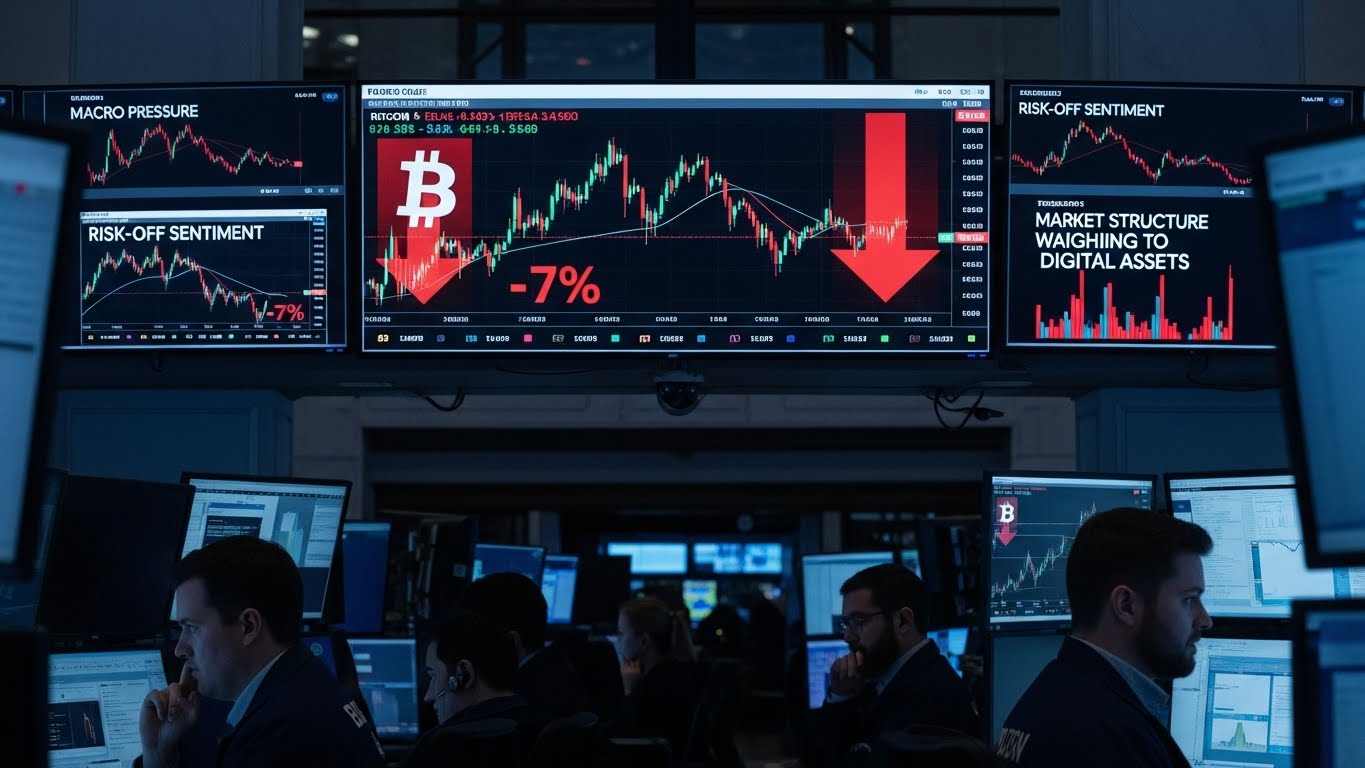
Key support levels under pressure
From a technical perspective, crypto prices retreat when key support levels fail to hold during U.S. trading sessions. These levels often represent areas of previous demand, and a breakdown signals weakening confidence. When Bitcoin or Ethereum slips below widely watched supports, selling pressure can accelerate.
The loss of support levels also triggers algorithmic and momentum-based selling. Technical breakdowns during high-volume U.S. hours carry more weight, as they reflect genuine shifts in supply and demand rather than low-liquidity noise.
Resistance zones limiting upside attempts
Repeated failures to reclaim resistance levels contribute to the ongoing retreat. When crypto prices attempt to recover but stall near resistance during U.S. trading hours, it reinforces bearish sentiment. Traders interpret these failures as signs that buyers lack conviction.
Over time, this pattern creates a series of lower highs, reinforcing the downtrend structure. Until resistance zones are decisively reclaimed, crypto prices retreat remains the dominant theme.
Volume and market participation signals
Volume analysis provides additional insight into why crypto prices retreat. Declining volume during recovery attempts suggests weak buying interest, while spikes in sell volume during U.S. hours indicate active distribution. This imbalance highlights cautious investor behavior and reinforces downside momentum.
Altcoins and Market Breadth During Downward Sessions
Altcoin underperformance in risk-off environments
When crypto prices retreat, altcoins often suffer more severe losses than Bitcoin. Higher volatility and lower liquidity make altcoins particularly vulnerable during risk-off U.S. trading days. As investors seek relative safety, capital flows out of smaller assets and into cash or stablecoins. This dynamic reduces altcoin market breadth, with fewer assets participating in recoveries. Weak breadth is a classic sign of a fragile market environment.
Sector-specific weakness and narrative breakdowns
Certain altcoin sectors are more sensitive to macro pressure. DeFi tokens, gaming assets, and high-growth narratives tend to underperform when liquidity tightens. As crypto prices retreat, these sectors often experience exaggerated declines. The breakdown of narrative-driven momentum further discourages speculative interest. Without strong catalysts, altcoins struggle to attract buyers during downward U.S. sessions.
Implications for diversification strategies
Altcoin weakness during crypto prices retreat challenges diversification strategies within the crypto market. While diversification can reduce idiosyncratic risk, systemic macro pressure often affects all assets simultaneously. This reality highlights the importance of understanding macro context rather than relying solely on asset allocation.
Investor Psychology and Sentiment Shifts
Fear-driven behavior during U.S. trading hours
Investor psychology plays a crucial role when crypto prices retreat. U.S. trading hours amplify emotional reactions due to higher participation and faster information flow. Negative headlines, market commentary, and economic data can quickly shift sentiment from cautious optimism to fear. This fear-driven behavior leads to rapid de-risking, pushing prices lower even in the absence of fundamentally negative crypto-specific news.
Short-term traders versus long-term holders
The retreat in crypto prices often reflects the actions of short-term traders rather than long-term holders. Short-term participants react quickly to market signals, increasing volatility during U.S. sessions. Long-term holders, by contrast, tend to remain inactive, absorbing supply gradually. Understanding this distinction helps explain why sharp declines can occur without significant changes in long-term fundamentals.
Role of derivatives and leverage
Derivatives markets amplify price movements during downturns. When crypto prices retreat, leveraged positions face liquidation, accelerating losses. U.S. trading hours see high derivatives activity, making them particularly prone to cascading liquidations. This dynamic reinforces downside momentum and contributes to sharp intraday moves.
Comparing Crypto Retreats to Traditional Market Pullbacks
Similarities with equity market behavior
The way crypto prices retreat during U.S. trading days increasingly resembles equity market pullbacks. Both markets respond to macro data, policy signals, and earnings expectations. This similarity reflects the growing integration of crypto into mainstream finance. As a result, crypto markets are less isolated and more responsive to global risk sentiment than in earlier years.
Differences in recovery dynamics
Despite similarities, crypto markets often recover differently from traditional assets. Higher volatility and continuous trading allow for faster rebounds once sentiment shifts. However, during prolonged macro uncertainty, crypto prices retreat can persist longer due to reduced liquidity. These differences highlight the unique risk-reward profile of digital assets.
Long-Term Implications of Repeated Crypto Price Retreats

Market maturation and structural resilience
Repeated retreats during U.S. trading days are part of the market’s maturation process. Over time, these corrections help establish stronger support zones and more sustainable trends. While painful in the short term, they contribute to long-term structural resilience. Understanding this process helps investors contextualize downturns within a broader growth trajectory.
Opportunities hidden within volatility
Periods when crypto prices retreat often create opportunities for disciplined investors. Lower prices can offer attractive entry points for long-term accumulation, provided risk is managed appropriately. Volatility, while challenging, is an inherent feature of emerging asset classes. Recognizing the difference between cyclical pullbacks and structural breakdowns is key to navigating these opportunities.
Conclusion
Crypto prices retreat during downward U.S. trading day action as macroeconomic pressure, technical weakness, and shifting investor sentiment converge. The influence of U.S. market hours underscores the growing integration of cryptocurrencies into global financial systems, where interest rates, dollar strength, and equity performance shape outcomes. Technical breakdowns, altcoin underperformance, and fear-driven behavior further reinforce downside momentum during these sessions.
Despite the challenges, these retreats also reflect a maturing market that is learning to price risk more efficiently. By understanding the macro context, technical structure, and psychological drivers behind crypto prices retreat, investors can make more informed decisions and navigate volatility with greater confidence.
FAQs
Q: Why do crypto prices retreat more sharply during U.S. trading hours?
Crypto prices retreat more sharply during U.S. trading hours because this session has the highest liquidity, institutional participation, and macro news flow. Economic data releases, equity market moves, and shifts in risk sentiment during this period strongly influence investor behavior, leading to increased volatility.
Q: Are crypto price retreats always linked to negative crypto-specific news?
No, crypto prices retreat often occurs without crypto-specific news. Many downturns are driven by broader macroeconomic factors such as interest rate expectations, inflation data, or equity market weakness. This highlights the growing correlation between crypto and traditional financial markets.
Q: How do interest rates affect the retreat in crypto prices?
Rising interest rate expectations reduce liquidity and increase the appeal of yield-bearing assets, making speculative investments less attractive. When markets anticipate tighter monetary policy, crypto prices retreat as investors reduce exposure to volatile assets like cryptocurrencies.
Q: Why do altcoins fall more than Bitcoin when crypto prices retreat?
Altcoins typically have lower liquidity and higher volatility than Bitcoin. During risk-off periods, investors seek relative safety, leading to greater selling pressure in altcoins. As a result, altcoins often experience deeper declines when crypto prices retreat.
Q: Can repeated crypto price retreats signal long-term weakness?
Not necessarily. Repeated retreats can reflect macro uncertainty and market recalibration rather than structural weakness. Over time, these pullbacks can help establish stronger foundations for future growth, especially if long-term adoption and fundamentals remain intact.