
The NFT market of 2025 looks nothing like the speculative frenzy that defined its early years. What was once dominated by hype, rapid flips, and short-lived collections has evolved into a more structured, utility-focused digital economy. The phrase “NFT Market Matures in 2025” captures a deeper shift taking place beneath the surface, where long-term value creation is finally replacing speculation as the primary growth driver.
This maturation did not happen overnight. It followed years of experimentation, failures, regulatory pressure, and technological refinement. As weak projects faded, stronger use cases began to emerge, reshaping how NFTs are perceived by investors, developers, and institutions alike. In 2025, NFTs are no longer viewed merely as digital collectibles but as programmable assets embedded into broader blockchain ecosystems.
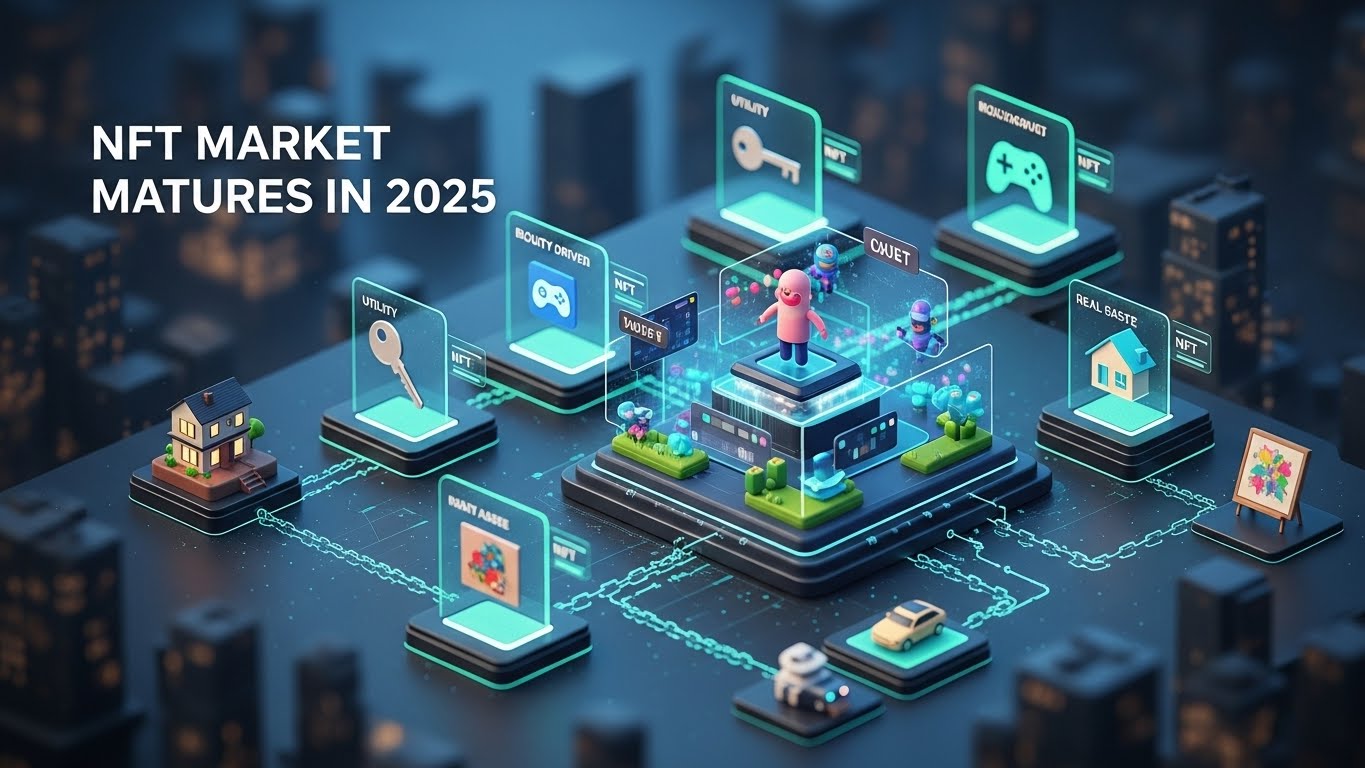
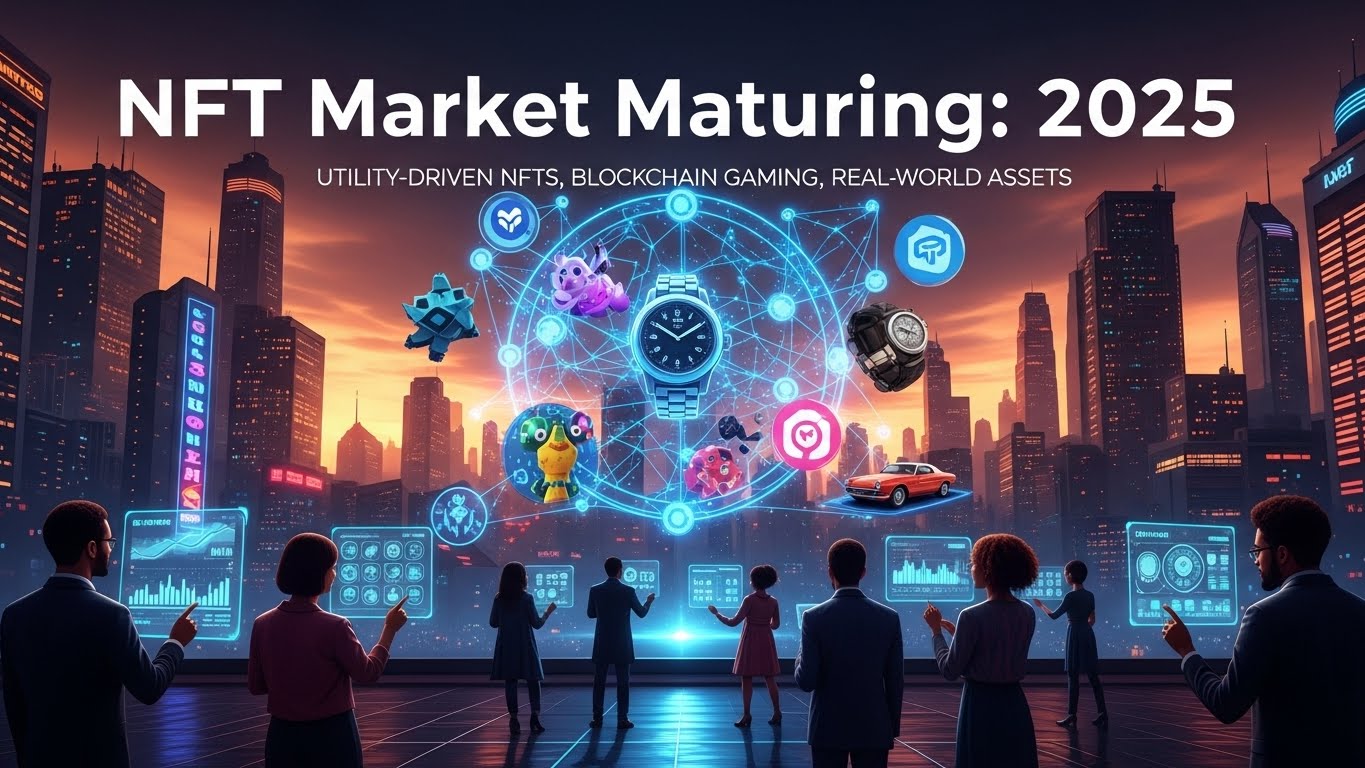
Three pillars now define this new phase of growth. Utility-driven NFTs provide real functionality beyond ownership. Blockchain gaming NFTs integrate digital assets directly into immersive virtual economies. Real World Asset NFTs (RWA NFTs) bridge on-chain technology with off-chain value, unlocking new financial and ownership models. Together, these forces explain why the NFT market matures in 2025 rather than collapsing under the weight of earlier excesses.
The transition from speculation to sustainable value
The end of hype-driven NFT cycles
In previous years, NFT markets were largely shaped by short-term speculation. Prices surged based on social media narratives rather than fundamentals, creating cycles of boom and bust. By the time 2025 arrived, market participants had grown more cautious, demanding clearer value propositions before committing capital.
This shift forced creators to rethink their approach. Projects without long-term utility struggled to maintain relevance, while those offering tangible benefits retained engaged communities. The NFT market matures in 2025 because speculation alone is no longer sufficient to sustain demand.
A more educated and selective user base
Another key factor behind market maturity is the evolution of NFT buyers themselves. Users in 2025 are far more informed about blockchain mechanics, smart contracts, and token economics. This knowledge has raised expectations across the ecosystem.
Buyers now evaluate NFTs based on functionality, roadmap credibility, and ecosystem integration. This increased scrutiny has reduced noise while amplifying genuinely innovative projects, reinforcing a healthier market structure.
Utility-driven NFTs reshape digital ownership
NFTs as access, identity, and functionality tools
One of the strongest signals that the NFT market matures in 2025 is the widespread adoption of utility-driven NFTs. These assets serve practical roles, acting as access passes, digital identities, and programmable rights within platforms.
Membership NFTs now grant access to exclusive services, events, and communities. Identity-based NFTs function as verifiable credentials, enabling users to prove achievements, skills, or affiliations without relying on centralized authorities. This expansion of purpose has fundamentally changed how NFTs are valued.
Integration with decentralized applications
Utility NFTs have become deeply integrated with decentralized applications across finance, media, and social platforms. Smart contracts enable NFTs to evolve over time, unlocking new features or benefits based on user activity.
This composability aligns NFTs with the broader Web3 infrastructure, making them essential components rather than standalone assets. As a result, utility-driven NFTs contribute to long-term engagement rather than short-term trading volume.
Gaming emerges as a cornerstone of NFT growth
Play-to-own replaces play-to-earn
The gaming sector has played a crucial role in demonstrating how NFTs can function within complex digital economies. Early play-to-earn models struggled due to inflationary token designs and unsustainable rewards. In response, developers shifted toward play-to-own frameworks.
In this model, NFTs represent in-game assets that players truly control and can use across evolving ecosystems. This shift supports the idea that the NFT market matures in 2025 by prioritizing gameplay quality and asset utility over speculative rewards.
Interoperability and persistent virtual economies
Gaming NFTs in 2025 are no longer confined to single titles. Interoperable assets allow players to move characters, items, and achievements across compatible games and virtual worlds. These persistent economies enhance player retention and increase the long-term value of gaming NFTs. Ownership becomes meaningful when assets retain relevance beyond a single experience, reinforcing sustainable growth within the sector.
Real World Asset NFTs bridge digital and physical value
Tokenizing tangible assets through NFTs
Perhaps the most transformative development supporting the statement “NFT Market Matures in 2025” is the rise of Real World Asset NFTs. These NFTs represent ownership or rights tied to physical assets such as real estate, commodities, intellectual property, and collectibles. By tokenizing these assets, NFTs provide liquidity, transparency, and fractional ownership opportunities previously unavailable to many investors. This convergence of blockchain technology and traditional finance has expanded the NFT audience beyond crypto-native users.
Institutional interest and regulatory alignment
RWA NFTs have attracted increasing attention from institutions seeking blockchain-based efficiency without excessive volatility. Clearer regulatory frameworks in key regions have further legitimized these assets, encouraging broader participation. As compliance improves and infrastructure matures, RWA NFTs act as a stabilizing force within the NFT ecosystem, reinforcing the market’s transition toward sustainable growth.
Infrastructure improvements support market maturity
Scalability and reduced transaction costs
Technical limitations once hindered NFT adoption, particularly high transaction fees and slow processing times. By 2025, advancements in layer-two solutions and alternative blockchains significantly improved scalability. Lower costs and faster transactions made NFTs accessible to wider audiences, supporting everyday use cases rather than exclusive high-value trades. This infrastructure evolution underpins why the NFT market matures in 2025 instead of stagnating.
Enhanced security and user experience
Improved wallet design, better user interfaces, and stronger security practices have reduced barriers to entry. These enhancements have made NFT interactions safer and more intuitive, encouraging mainstream adoption. As user experience improves, NFTs transition from experimental technology to practical digital tools embedded in daily online activities.
Creator economies evolve alongside NFTs
Sustainable revenue models for creators
NFTs in 2025 provide creators with recurring revenue opportunities through royalties and programmable ownership rights. This shift empowers artists, developers, and content creators to build long-term businesses rather than relying on one-time sales. The maturation of creator tools aligns NFTs with broader trends in digital entrepreneurship, reinforcing their relevance beyond speculative markets.
Community-driven value creation
Communities now play a central role in NFT success. Projects that involve users in governance, development, and value creation foster stronger loyalty and resilience. This collaborative dynamic strengthens ecosystems over time, further supporting the narrative that the NFT market matures in 2025 through shared ownership and participation.
Market psychology and long-term investment outlook
Reduced volatility and healthier price discovery
While volatility has not disappeared entirely, NFT markets in 2025 exhibit more rational price behavior. Valuations increasingly reflect utility, adoption metrics, and revenue potential rather than hype cycles. This healthier price discovery process attracts long-term investors who prioritize fundamentals over speculation, contributing to market stability.
NFTs as part of diversified digital portfolios
NFTs are increasingly viewed as components of diversified digital asset portfolios. Investors evaluate them alongside cryptocurrencies, tokenized assets, and decentralized finance positions. This integration into broader investment strategies underscores how NFTs have evolved from novelty items into recognized asset classes.
Challenges that remain despite market maturity
Balancing innovation with regulation
As NFTs integrate more deeply with real-world assets and financial systems, regulatory scrutiny continues to increase. Striking a balance between innovation and compliance remains an ongoing challenge. Projects that proactively address legal considerations are more likely to thrive, while those that ignore regulatory realities face heightened risk.
Avoiding overfinancialization of creativity
Another challenge lies in preserving creative expression amid growing financialization. While utility and RWA NFTs drive growth, maintaining space for artistic experimentation is essential for cultural relevance. The NFT market matures in 2025 by learning to balance economic utility with creative freedom rather than prioritizing one at the expense of the other.
Conclusion
The evolution of NFTs in 2025 marks a decisive turning point in the digital asset landscape. The statement “NFT Market Matures in 2025” is supported by clear structural changes driven by utility-focused applications, immersive gaming ecosystems, and real-world asset integration. These developments have transformed NFTs from speculative instruments into functional, value-generating digital assets.
This maturation reflects broader shifts within blockchain technology, user behavior, and institutional participation. While challenges remain, the foundation built in 2025 positions NFTs for sustained relevance and innovation in the years ahead. Rather than fading as a passing trend, NFTs have proven their ability to adapt, evolve, and contribute meaningfully to the future of digital ownership.
FAQs
Q: How does the NFT market maturing in 2025 differ from earlier NFT cycles?
In earlier cycles, NFTs were driven mainly by hype and speculation, whereas in 2025 the focus has shifted toward real utility, long-term engagement, and integration with broader blockchain ecosystems. This change has created more sustainable growth patterns.
Q: Why are utility-driven NFTs so important to market maturity?
Utility-driven NFTs provide functional benefits such as access, identity, and programmable rights, which create ongoing value for users. This reduces reliance on price speculation and supports long-term adoption across industries.
Q: What role does blockchain gaming play in the NFT market of 2025?
Blockchain gaming has become a major growth driver by embedding NFTs into immersive virtual economies. Play-to-own models and interoperable assets have strengthened player engagement and asset longevity.
Q: How do Real World Asset NFTs contribute to NFT market stability?
RWA NFTs link digital ownership with tangible assets, attracting institutional interest and reducing volatility. Their connection to real-world value enhances trust and expands the NFT user base beyond crypto-native participants.
Q: Are NFTs in 2025 still a high-risk investment?
While risks remain, NFTs in 2025 are generally less speculative than in earlier years. Improved infrastructure, clearer regulation, and stronger use cases have made the market more predictable, though careful project evaluation is still essential.